Prevent quietly quitting and boost your employee satisfaction
Sep 25, 2026
Quiet quitting isn’t about resigning; it’s about emotionally checking out while staying on the

Prevent quietly quitting and boost your employee satisfaction
 Tram Ta
 Sep 25, 2026
Quiet quitting isn’t about resigning; it’s about emotionally checking out while staying on the job. Across Vietnam, HR managers notice more employees doing just enough to get by, avoiding initiative, losing motivation, and dropping their overall employee satisfaction. These subtle behaviours in today’s competitive market signal deeper issues with employee experience, trust, and engagement.
Fortunately, with HR survey tools in Vietnam like those offered by Cimigo, businesses can identify quiet quitting early, measure every employee’s disatisfaction, and take proactive steps before productivity and morale suffer.
Once-enthusiastic staff begin sticking strictly to job descriptions. Tasks are completed, but there’s no initiative or ownership—a clear sign that their internal employee satisfaction has dropped. This isn’t laziness; it’s a lack of purpose. One retail firm misread this as a salary issue, but Cimigo’s feedback survey revealed a lack of development clarity. Introducing a revised career path approach restored motivation and raised the team’s overall staff “happiness”.
Something’s wrong when previously vocal employees stop contributing to meetings or disengage from team chats, signaling a decline in their emoitions. During a leadership change at a Hanoi logistics company, participation dipped until structured feedback and communication updates were introduced, boosting internal trust by 30% and significantly raising the workplace employee satisfaction.
Employees who give vague responses or stop completing surveys likely feel unheard, leading to a diminished employee satisfaction. Cimigo’s anonymous survey tools and post-survey “You said, we did” campaigns help bridge this trust gap, reigniting a culture of transparency while restoring a high employee satisfaction across all teams.
When deadlines slip and employees avoid extra tasks, disengagement and a low employee satisfaction are usually at the core. In one food and beverage company, mid-level managers were burnt out. With wellness days and better workload planning, job employee satisfaction jumped by 28 points in two quarters.
Disengaged employees with a low employee satisfaction struggle to offer excellent service. A fintech company traced poor customer reviews directly to low staff morale. After enhancing internal communication and restoring team employee satisfaction, client satisfaction and staff engagement improved hand in hand.
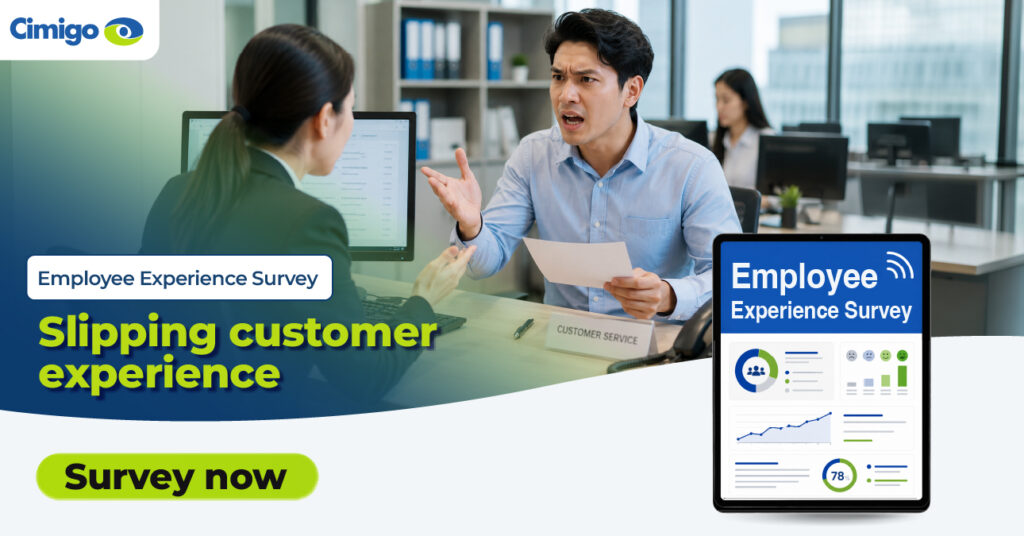
Avoiding upskilling or ignoring learning opportunities shows that an employee sees no future in the organisation, directly impacting their long-term employee satisfaction. One finance firm segmented staff feedback by generation, introducing tailored mentorships that boosted overall engagement and team employee satisfaction by 22%.
Silence in group chats, no celebration of wins, and a lack of camaraderie reflect a shrinking team culture and a slipping employee satisfaction. A Da Nang startup reversed this trend by encouraging peer feedback and rotating team leads, raising job employee satisfaction by 40%.
A sudden increase in unexplained sick days may indicate emotional burnout and a critically low employee satisfaction. One food and beverage company identified high stress in key roles through Cimigo’s survey and introduced targeted well-being strategies to reduce absenteeism, restore balance, and rebuild a healthy employee satisfaction.
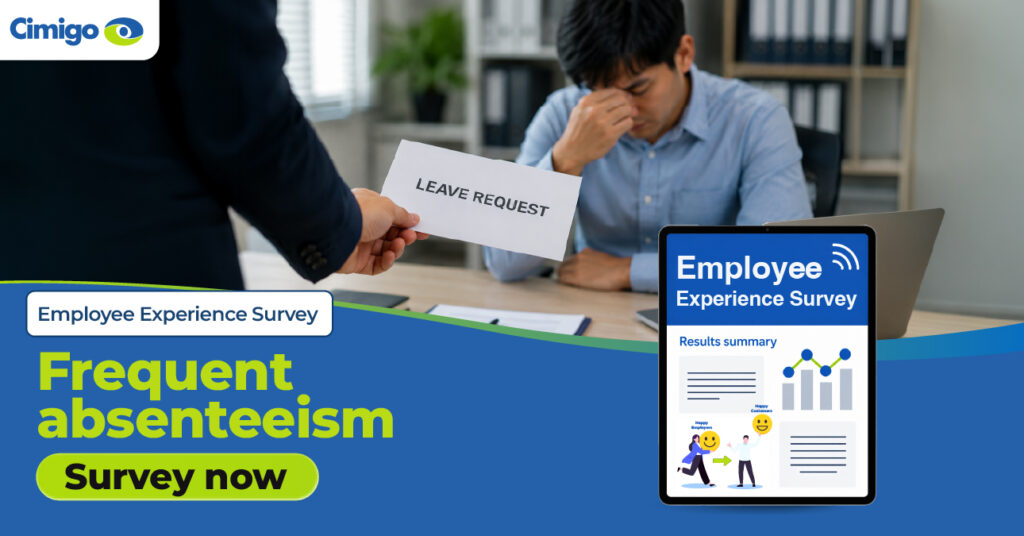
When performance dips without a corresponding increase in workload, it’s often a red flag regarding the employee’s satisfaction. At a retail firm, Cimigo’s dashboard highlighted a lack of recognition. A coaching initiative reversed the trend, boosted the team’s employee satisfaction, and significantly reduced staff turnover.
If staff resist even positive changes, they’ve likely disengaged because their feeling has been neglected over time. Quiet quitters often see no point in new policies. Cimigo’s work shows that when leaders are involved and transparent, resistance fades, engagement flourishes, and the overall satisfaction improves.
Quiet quitting is rarely loud, but its impact on performance and overall employee satisfaction is profound. It’s easy to blame laziness or external pressures, but the issue most often lies within the organisation’s communication, culture, or leadership alignment.
With Cimigo’s HR survey tools in Vietnam, businesses gain the cultural nuance and local insights to detect disengagement early and protect each employee satisfaction. It’s not just about gathering feedback; it’s about listening intently, acting purposefully, and building a high employee satisfaction across your entire organization.
If you have questions, please get in touch with Cimigo at ask@cimigo.com for support.

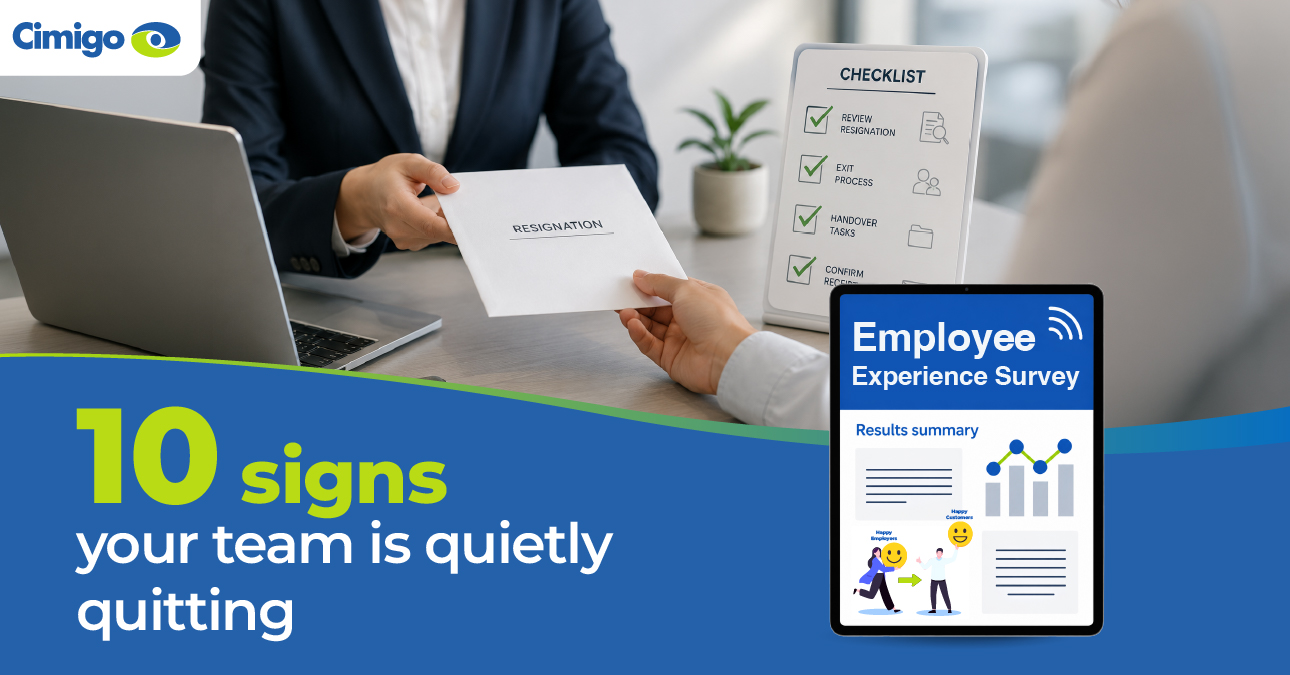
Prevent quietly quitting and boost your employee satisfaction
Sep 25, 2026
Quiet quitting isn’t about resigning; it’s about emotionally checking out while staying on the

Vietnam consumer trends 2026
Feb 05, 2026
Vietnam is still a growth market, but consumer trends 2026 show that it has matured faster than

Indonesia consumer trends 2025
May 11, 2025
Indonesia consumer trends 2025 highlights eight key reasons why Indonesia is poised for a rebound.
Đoàn Ngọc Huy (Johnny Doan), CMO & Market Research Expert -
As a Marketing Director and Market Research Expert Advisor across international markets, I have collaborated with numerous market research agencies, both global and local, that operate with a high level of professionalism and effectiveness. Cimigo is among the most outstanding. The Cimigo team demonstrates exceptional professionalism, strong commitment, and operational excellence. From research design and fieldwork execution to insight analysis, all stages are conducted rigorously, delivered on schedule, and closely aligned with business objectives. This is a highly capable team that I would confidently recommend to my partners and stakeholders.
As a Marketing Director and Market Research Expert Advisor across international markets, I have collaborated with numerous market research agencies, both global and local, that operate with a high level of professionalism and effectiveness. Cimigo is among the most outstanding. The Cimigo team demonstrates exceptional professionalism, strong commitment, and operational excellence. From research design and fieldwork execution to insight analysis, all stages are conducted rigorously, delivered on schedule, and closely aligned with business objectives. This is a highly capable team that I would confidently recommend to my partners and stakeholders.
Lisa Nguyen - Vietnam Marketing Lead
Mark Ratcliff - Managing Director
The team at Cimigo are my favourite researchers in South East Asia. They’ve proved adept at tackling the most private and complex personal issues at qualitative research level, not flinching when the client endlessly chopped and changed fieldwork timing, or ramped up the workload without warning. They have recruited the most extraordinarily niche consumers without pause or complaint. Their patience with clients and their flexibility and hard work that went above and beyond what was initially asked of them on two projects relating to sexual behaviour means there is now no other research company we would choose to work with in that part of Asia. The fact they also pulled off a third project for us so well, on men’s relationship with beer and beer advertising, shows they have breadth of expertise— we still quote from the report they produced.
The team at Cimigo are my favourite researchers in South East Asia. They’ve proved adept at tackling the most private and complex personal issues at qualitative research level, not flinching when the client endlessly chopped and changed fieldwork timing, or ramped up the workload without warning. They have recruited the most extraordinarily niche consumers without pause or complaint. Their patience with clients and their flexibility and hard work that went above and beyond what was initially asked of them on two projects relating to sexual behaviour means there is now no other research company we would choose to work with in that part of Asia. The fact they also pulled off a third project for us so well, on men’s relationship with beer and beer advertising, shows they have breadth of expertise— we still quote from the report they produced.

Kevin McQuillan - Chief Marketing Officer

Sam Houston - Chief Executive Officer

Minh Thu - Consumer Market Insights Manager

Travis Mitchell - Executive Director
Malcolm Farmer - Managing Director
Hy Vu - Head of Research Department

Joe Nelson - New Zealand Consulate General
Steve Kretschmer - Executive Director
York Spencer - Global Marketing Director

Laura Baines - Programmes Snr Manager
Mai Trang - Brand Manager of Romano
Hanh Dang - Product Marketing Manager
Luan Nguyen - Market Research Team Leader
Max Lee - Project Manager

Chris Elkin - Founder

Ronald Reagan - Deputy Group Head After Sales & CS Operation
Chad Ovel - Partner

Private English Language Schools - Chief Executive Officer
Rick Reid - Creative Director

Anya Nipper - Project Coordination Director

Dr. Jean-Marcel Guillon - Chief Executive Officer

Joyce - Pricing Manager

Matt Thwaites - Commercial Director
Aashish Kapoor - Head of Marketing

Kelly Vo - Founder & Host
Thanyachat Auttanukune - Board of Management
Hamish Glendinning - Business Lead

Thuy Le - Consumer Insight Manager
Richard Willis - Director

Ha Dinh - Project Lead
Geert Heestermans - Marketing Director

Vo Thi Thuy Ha - Commercial Effectiveness

Louise Knox - Consumer Technical Insights

Aimee Shear - Senior Research Executive
Dennis Kurnia - Head of Consumer Insights
Tania Desela - Senior Product Manager
Thu Phung - CTI Manager
Linda Yeoh - CMI Manager

 Team
Team
Cimigo’s market research team in Vietnam and Indonesia love to help you make better choices.
 Solutions
Cimigo provides market research solutions in Vietnam and Indonesia that will help you make better choices.
 Trends
Cimigo provides a range of consumer marketing trends and market research on market sectors and consumer segments in Vietnam and Indonesia.
 Reports
Cimigo provides a range of free market research reports on market sectors and consumer segments in Vietnam and Indonesia.