Voice of Employee survey: 5 case studies and lessons
Oct 27, 2026
Why employee voice matters in the changing workplace A Voice of Employee survey helps

Cimigo’s employee experience survey helps you understand what strengthens or weakens commitment to your organisation. Identify workplace concerns, compare employee groups and prioritise actions that support your people and business objectives.
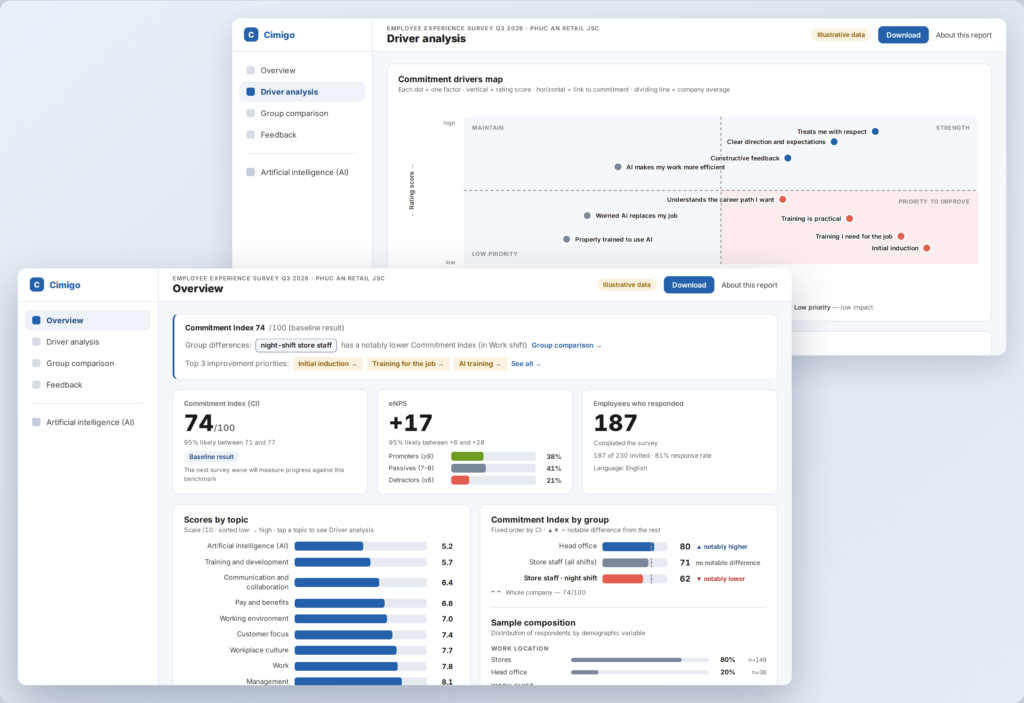
Whether you’re diagnosing attrition, assessing engagement, or setting priorities for your people strategy, the survey provides HR and leadership with a shared evidence base for decision-making.
Our employee experience survey examines the factors that shape how people feel about their work and whether they intend to stay. It starts with overall commitment, then explores the workplace experiences that may strengthen or weaken it.
Customise the questionnaire to your organisation, sector and objectives. Compare results by department, seniority, tenure, location or other relevant groups while maintaining confidentiality. Use the findings to set priorities for improving the employee experience.
Overall commitment provides a high-level view of the relationship between employees and the organisation. It indicates whether employees would recommend the organisation, whether they regard it favourably compared with other employers, whether they expect to remain, and how satisfied they are overall. This module explores:
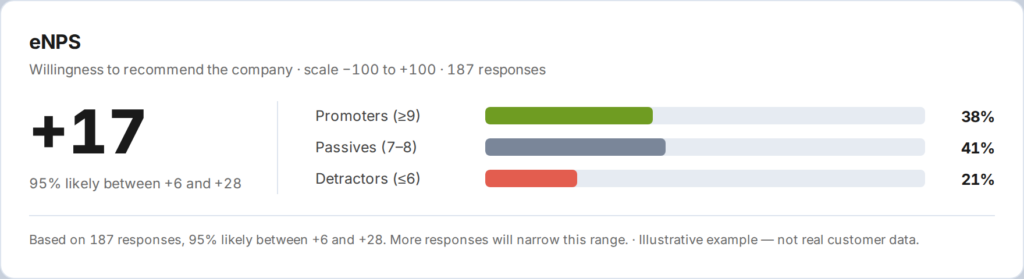
The results provide headline indicators that help us understand the more detailed dimensions of the employee experience.
This part of the employee experience survey examines whether work feels secure, manageable and rewarding. It also explores challenge, fulfilment and autonomy. This module explores:
The results help identify whether the design and demands of the job support employee motivation or create pressure that may weaken the overall experience.
This module evaluates whether employees have a workplace that enables them to perform effectively and supports their practical day-to-day needs. This module explores:
The results help clarify which elements of the physical and operational environment meet employee needs and where workplace improvements should be prioritised.
The employee-manager relationship is one of the most immediate influences on the daily employee experience. This module assesses whether managers provide clarity, support, fair treatment and constructive development. This module explores:
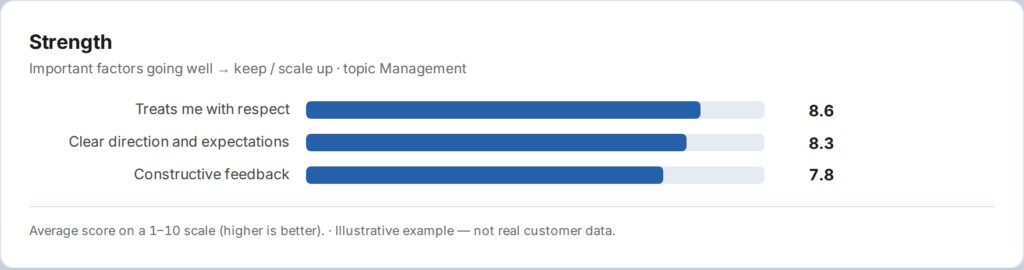
The results help identify management behaviours that strengthen employee confidence and performance, as well as areas where managers may need greater support or capability building.
This module examines how effectively information, ideas and support move through the organisation. This module explores:
The results reveal where communication barriers or organisational silos may be affecting coordination, trust and employee effectiveness.
This module explores how employees perceive the competitiveness, relevance and fairness of the rewards they receive. This module explores:
The results help understand which elements of the total reward package contribute positively to the employee experience and which may require review.
The employee experience survey asks whether employees receive the learning, guidance and opportunities they need to succeed and progress. This module explores:
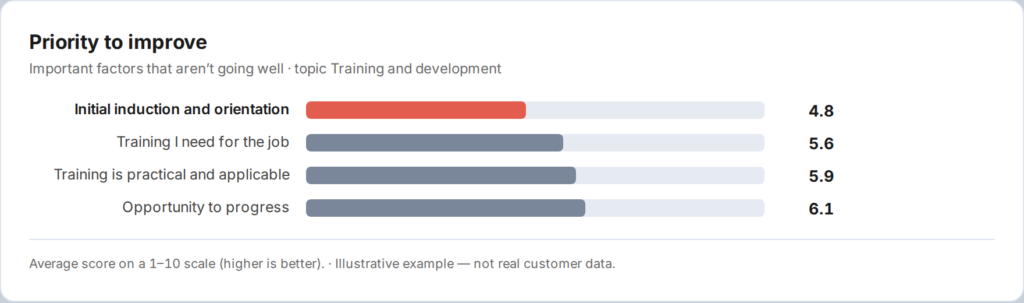
The results help identify gaps in capability development and understand whether employees can see a meaningful future within the organisation.
This module connects employee experience with the organisation’s ability to deliver a strong customer experience. This module explores:
The results show whether employees feel they have the understanding, training, information, tools and time to respond effectively to customers.
This optional module explores how employees are currently experiencing artificial intelligence in their daily work. This module explores:
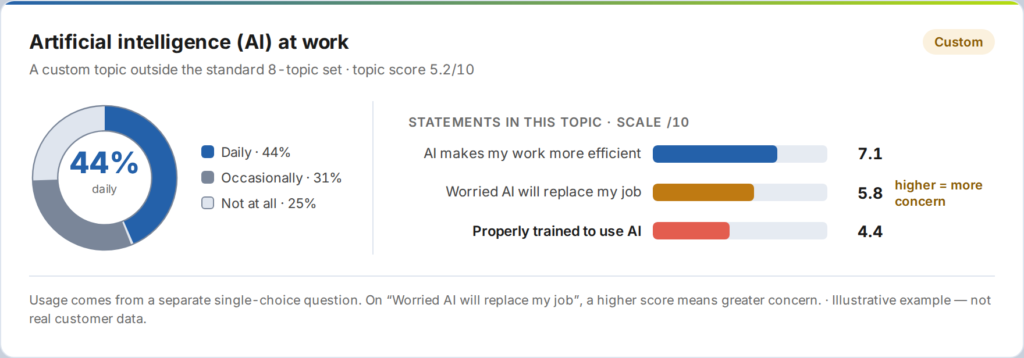
The results help understand AI adoption from the employee perspective and identify where guidance, training or organisational support may be required.
Employee feedback reveals how people experience the organisation’s values, fairness and contribution beyond the workplace. This module explores:
The results help determine whether the culture experienced by employees aligns with the organisation’s stated values and strategic ambitions.
Every organisation has its own strategy, values and employee challenges. Add statements to the employee experience survey to cover priorities beyond the standard framework. Use your organisation’s own language where appropriate. Custom statements may reflect:
Closed-ended measures show where the experience is strong or weak. Open feedback helps explain why. Employees are invited to describe:
This section adds employee language and context to the quantitative findings, helping stakeholders understand the experiences behind the scores.
Employee experience is rarely uniform across an organisation. Profile questions enable exploration of results across relevant employee groups while maintaining anonymity. Potential analysis groups include:
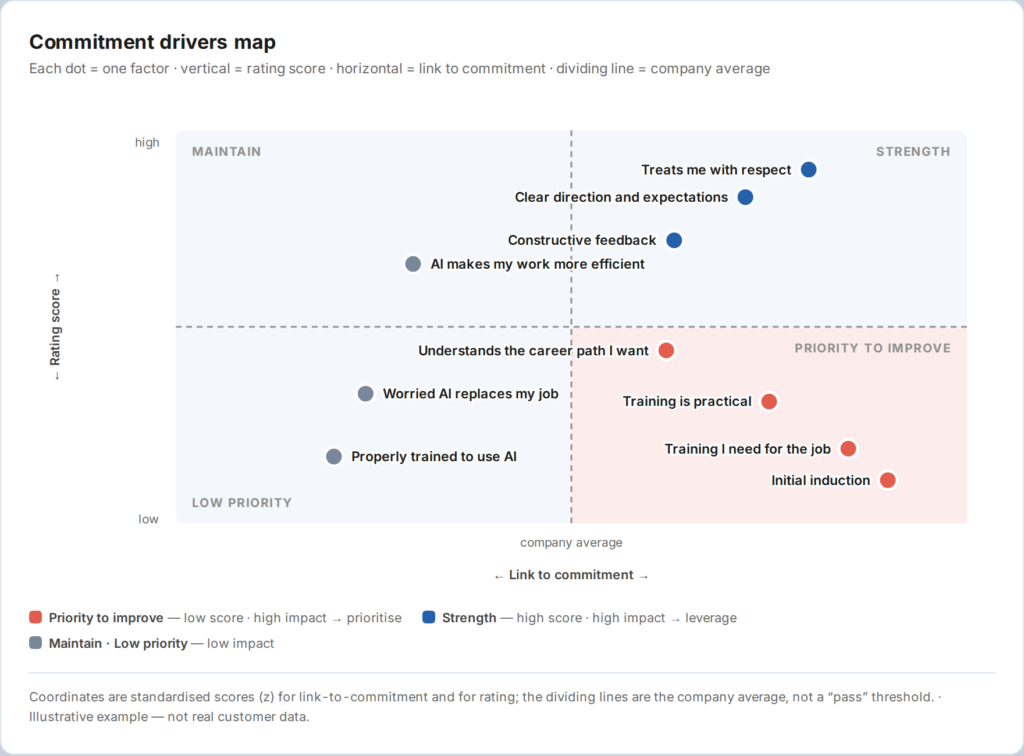
Your employee experience survey results include a dashboard to help HR and leadership explore findings, filter groups and focus on priority issues. Recommendations guide actions on policy, management and culture.
Start with the business question your organisation needs to answer. Cimigo will help you design a confidential employee experience survey and turn the findings into priorities for action.
If you have questions about your employee experience survey, please get in touch with Cimigo at ask@cimigo.com for support.
For wider research context, see Gallup’s meta-analysis of employee engagement and business outcomes.

Voice of Employee survey: 5 case studies and lessons
Oct 27, 2026
Why employee voice matters in the changing workplace A Voice of Employee survey helps
8 tips for HR managers to improve employee experience management
Sep 30, 2026
Employee experience (EX) has quickly become a defining element of organisational success,
10 employee experience strategies
Oct 06, 2026
To stand out in a vibrant job market, businesses must go beyond conventional incentives and adopt
Đoàn Ngọc Huy (Johnny Doan), CMO & Market Research Expert -
As a Marketing Director and Market Research Expert Advisor across international markets, I have collaborated with numerous market research agencies, both global and local, that operate with a high level of professionalism and effectiveness. Cimigo is among the most outstanding. The Cimigo team demonstrates exceptional professionalism, strong commitment, and operational excellence. From research design and fieldwork execution to insight analysis, all stages are conducted rigorously, delivered on schedule, and closely aligned with business objectives. This is a highly capable team that I would confidently recommend to my partners and stakeholders.
As a Marketing Director and Market Research Expert Advisor across international markets, I have collaborated with numerous market research agencies, both global and local, that operate with a high level of professionalism and effectiveness. Cimigo is among the most outstanding. The Cimigo team demonstrates exceptional professionalism, strong commitment, and operational excellence. From research design and fieldwork execution to insight analysis, all stages are conducted rigorously, delivered on schedule, and closely aligned with business objectives. This is a highly capable team that I would confidently recommend to my partners and stakeholders.
Lisa Nguyen - Vietnam Marketing Lead
Mark Ratcliff - Managing Director
The team at Cimigo are my favourite researchers in South East Asia. They’ve proved adept at tackling the most private and complex personal issues at qualitative research level, not flinching when the client endlessly chopped and changed fieldwork timing, or ramped up the workload without warning. They have recruited the most extraordinarily niche consumers without pause or complaint. Their patience with clients and their flexibility and hard work that went above and beyond what was initially asked of them on two projects relating to sexual behaviour means there is now no other research company we would choose to work with in that part of Asia. The fact they also pulled off a third project for us so well, on men’s relationship with beer and beer advertising, shows they have breadth of expertise— we still quote from the report they produced.
The team at Cimigo are my favourite researchers in South East Asia. They’ve proved adept at tackling the most private and complex personal issues at qualitative research level, not flinching when the client endlessly chopped and changed fieldwork timing, or ramped up the workload without warning. They have recruited the most extraordinarily niche consumers without pause or complaint. Their patience with clients and their flexibility and hard work that went above and beyond what was initially asked of them on two projects relating to sexual behaviour means there is now no other research company we would choose to work with in that part of Asia. The fact they also pulled off a third project for us so well, on men’s relationship with beer and beer advertising, shows they have breadth of expertise— we still quote from the report they produced.

Kevin McQuillan - Chief Marketing Officer
Sam Houston - Chief Executive Officer
Minh Thu - Consumer Market Insights Manager

Travis Mitchell - Executive Director
Malcolm Farmer - Managing Director
Hy Vu - Head of Research Department
Joe Nelson - New Zealand Consulate General
Steve Kretschmer - Executive Director
York Spencer - Global Marketing Director

Laura Baines - Programmes Snr Manager
Mai Trang - Brand Manager of Romano
Hanh Dang - Product Marketing Manager
Luan Nguyen - Market Research Team Leader
Max Lee - Project Manager
Chris Elkin - Founder
Ronald Reagan - Deputy Group Head After Sales & CS Operation
Chad Ovel - Partner

Private English Language Schools - Chief Executive Officer
Rick Reid - Creative Director
Anya Nipper - Project Coordination Director

Dr. Jean-Marcel Guillon - Chief Executive Officer
Joyce - Pricing Manager

Matt Thwaites - Commercial Director
Aashish Kapoor - Head of Marketing
Kelly Vo - Founder & Host
Thanyachat Auttanukune - Board of Management
Hamish Glendinning - Business Lead

Thuy Le - Consumer Insight Manager
Richard Willis - Director

Ha Dinh - Project Lead
Geert Heestermans - Marketing Director
Vo Thi Thuy Ha - Commercial Effectiveness

Louise Knox - Consumer Technical Insights
Aimee Shear - Senior Research Executive
Dennis Kurnia - Head of Consumer Insights
Tania Desela - Senior Product Manager
Thu Phung - CTI Manager
Linda Yeoh - CMI Manager

 Team
Cimigo’s market research team in Vietnam and Indonesia love to help you make better choices.
 Solutions
Cimigo provides market research solutions in Vietnam and Indonesia that will help you make better choices.
 Trends
Cimigo provides a range of consumer marketing trends and market research on market sectors and consumer segments in Vietnam and Indonesia.
 Reports
Cimigo provides a range of free market research reports on market sectors and consumer segments in Vietnam and Indonesia.