Indonesia consumer trends 2026
Oct 18, 2026
Indonesia consumer trends 2026 Indonesia‘s economy continues to demonstrate resilience in

Vietnam PMI September 2026: Growth slows as exports fall
 Admin
Admin
 Oct 01, 2026
Cimigo Vietnam market research has collected the Vietnam PMI – manufacturing purchasing managers index since 2013. S&P Global compiles the Vietnam PMI S&P Global from responses to monthly questionnaires sent to purchasing managers in a panel of around 400 manufacturers.
The Vietnamese manufacturing sector remained in growth territory in September, although rates of expansion in output and new orders eased from those seen in August. Softer growth of new orders meant that firms were able to keep on top of workloads despite a second successive monthly reduction in employment. Meanwhile, input costs continued to rise markedly, but the rate of output price inflation eased again, in part due to competitive pressures.
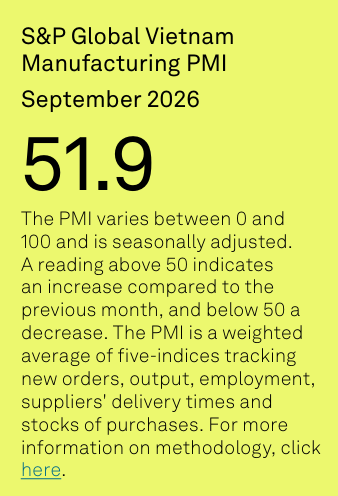
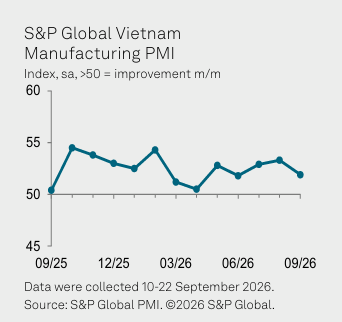
The S&P Global Vietnam Manufacturing Purchasing Managers’ Index™ (PMI®) dropped to 51.9 in September from August’s reading of 53.3, thereby signalling a smaller improvement in the health of the sector at the end of the third quarter. Nonetheless, business conditions have now strengthened in each of the past 15 months. A further marked rise in manufacturing production was registered in September, continuing the sequence of expansion which began in May 2025. The rate of growth eased from that seen in August, however.
Panellists reported that higher new orders were behind the latest increase in output, but here too the pace of expansion slowed. In fact, the rise in new business was the weakest in
the current five-month period of growth. Where new orders increased, panellists reported improving market conditions and customers expanding their order volumes.
There were again reports of weakness in international demand, however, resulting in a second successive fall in new export orders. New business from abroad decreased solidly, and at the fastest pace since April. Backlogs of work were broadly unchanged in September, after having risen in each of the previous two months. While a combination of rising new orders and falling employment imparted pressure on capacity at some firms, others reported that slower growth of new business meant that they were able to keep on top of workloads.
The latest reduction in employment was the second in as many months, as panellists reported a combination of staff resignations and restructuring efforts. The fall in staffing levels in September was only slight, however.
A further marked increase in purchasing activity was recorded in September as firms secured inputs to help support output growth. The use of materials in the production process meant that stocks of inputs continued to fall.
Manufacturers also expressed a desire to draw down holdings of finished products, and used the prompt shipment of goods to customers to achieve this. In fact, stocks of finished goods decreased at the sharpest pace since the survey began in March 2011. Suppliers’ delivery times lengthened modestly, meanwhile, with panellists linking delays to issues with international shipping and poor weather conditions.
International issues were also central to a further rise in input costs as the war in the Middle East caused higher prices for fuel and oil. Increased transportation costs were also reported. The rate of input price inflation was marked and slightly faster than in August, albeit still among the lowest over the past year. Meanwhile, the pace of output price inflation slowed for the fifth consecutive month and was the weakest since June 2025, as strong competition limited the ability of firms to pass higher input costs through to customers.
Expected improvements in market conditions supported confidence that output will rise over the coming year. The planned launch of new products was also behind the optimistic outlook, with sentiment reaching its highest since February.
The S&P Global Vietnam Manufacturing PMI® is compiled by S&P Global from responses to monthly questionnaires sent to purchasing managers in a panel of around 400 manufacturers. The panel is stratified by detailed sector and company workforce size, based on contributions to GDP.
Survey responses are collected by Cimigo Vietnam in the second half of each month and indicate the direction of change compared to the previous month. A diffusion index is calculated for each survey variable. The index is the sum of the percentage of ‘higher’ responses and half the percentage of ‘unchanged’ responses.
The indices vary between 0 and 100, with a reading above 50 indicating an overall increase compared to the previous month, and below 50 an overall decrease. The indices are then seasonally adjusted.


Indonesia consumer trends 2026
Oct 18, 2026
Indonesia consumer trends 2026 Indonesia‘s economy continues to demonstrate resilience in

Vietnam’s consumer outlook 2027
Oct 14, 2026
Vietnam’s consumer outlook 2027: Why strong economic growth does not guarantee consumer
The Road to Saigon
Apr 15, 2025
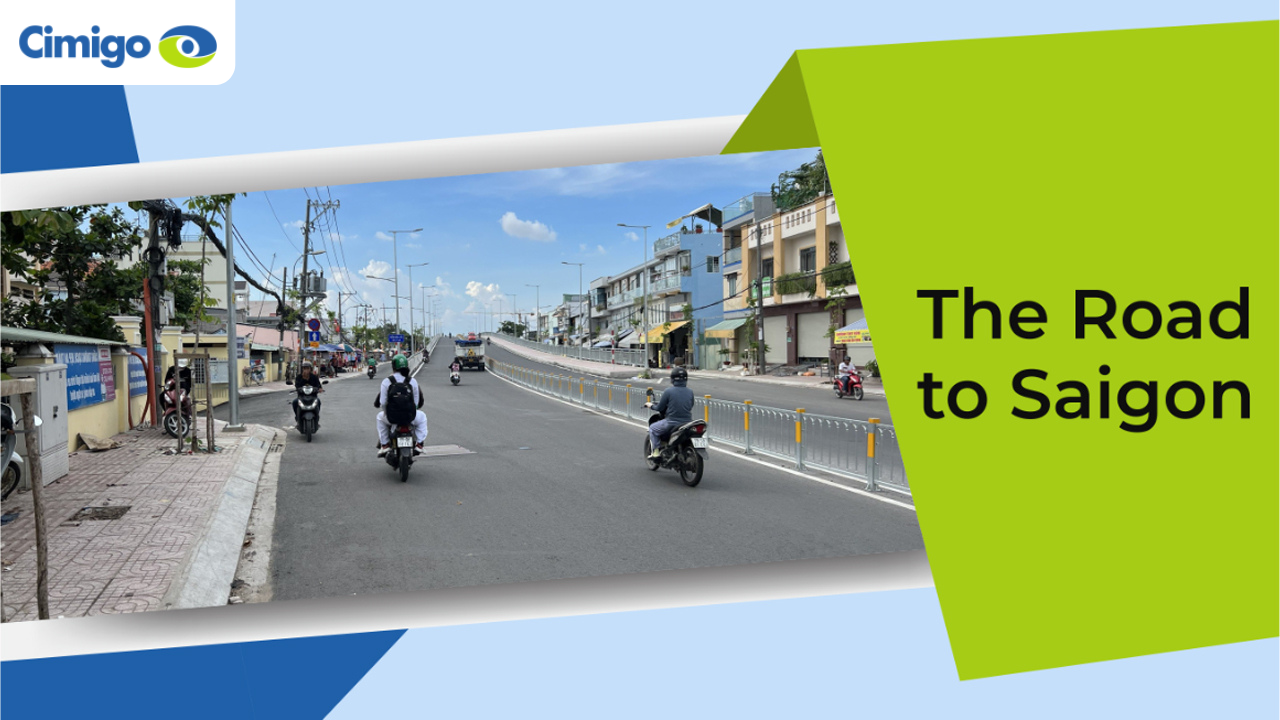
Watch the Road to Saigon and learn about the stories of the residents. Understand their lives,

Đoàn Ngọc Huy (Johnny Doan), CMO & Market Research Expert -
As a Marketing Director and Market Research Expert Advisor across international markets, I have collaborated with numerous market research agencies, both global and local, that operate with a high level of professionalism and effectiveness. Cimigo is among the most outstanding. The Cimigo team demonstrates exceptional professionalism, strong commitment, and operational excellence. From research design and fieldwork execution to insight analysis, all stages are conducted rigorously, delivered on schedule, and closely aligned with business objectives. This is a highly capable team that I would confidently recommend to my partners and stakeholders.
As a Marketing Director and Market Research Expert Advisor across international markets, I have collaborated with numerous market research agencies, both global and local, that operate with a high level of professionalism and effectiveness. Cimigo is among the most outstanding. The Cimigo team demonstrates exceptional professionalism, strong commitment, and operational excellence. From research design and fieldwork execution to insight analysis, all stages are conducted rigorously, delivered on schedule, and closely aligned with business objectives. This is a highly capable team that I would confidently recommend to my partners and stakeholders.

Lisa Nguyen - Vietnam Marketing Lead

Mark Ratcliff - Managing Director
The team at Cimigo are my favourite researchers in South East Asia. They’ve proved adept at tackling the most private and complex personal issues at qualitative research level, not flinching when the client endlessly chopped and changed fieldwork timing, or ramped up the workload without warning. They have recruited the most extraordinarily niche consumers without pause or complaint. Their patience with clients and their flexibility and hard work that went above and beyond what was initially asked of them on two projects relating to sexual behaviour means there is now no other research company we would choose to work with in that part of Asia. The fact they also pulled off a third project for us so well, on men’s relationship with beer and beer advertising, shows they have breadth of expertise— we still quote from the report they produced.
The team at Cimigo are my favourite researchers in South East Asia. They’ve proved adept at tackling the most private and complex personal issues at qualitative research level, not flinching when the client endlessly chopped and changed fieldwork timing, or ramped up the workload without warning. They have recruited the most extraordinarily niche consumers without pause or complaint. Their patience with clients and their flexibility and hard work that went above and beyond what was initially asked of them on two projects relating to sexual behaviour means there is now no other research company we would choose to work with in that part of Asia. The fact they also pulled off a third project for us so well, on men’s relationship with beer and beer advertising, shows they have breadth of expertise— we still quote from the report they produced.

Kevin McQuillan - Chief Marketing Officer

Sam Houston - Chief Executive Officer

Minh Thu - Consumer Market Insights Manager
Travis Mitchell - Executive Director

Malcolm Farmer - Managing Director

Hy Vu - Head of Research Department

Joe Nelson - New Zealand Consulate General

Steve Kretschmer - Executive Director
York Spencer - Global Marketing Director

Laura Baines - Programmes Snr Manager

Mai Trang - Brand Manager of Romano

Hanh Dang - Product Marketing Manager

Luan Nguyen - Market Research Team Leader
Max Lee - Project Manager

Chris Elkin - Founder

Ronald Reagan - Deputy Group Head After Sales & CS Operation
Chad Ovel - Partner

Private English Language Schools - Chief Executive Officer

Rick Reid - Creative Director

Anya Nipper - Project Coordination Director

Dr. Jean-Marcel Guillon - Chief Executive Officer

Joyce - Pricing Manager

Matt Thwaites - Commercial Director
Aashish Kapoor - Head of Marketing

Kelly Vo - Founder & Host
Thanyachat Auttanukune - Board of Management
Hamish Glendinning - Business Lead

Thuy Le - Consumer Insight Manager
Richard Willis - Director

Ha Dinh - Project Lead
Geert Heestermans - Marketing Director

Vo Thi Thuy Ha - Commercial Effectiveness

Louise Knox - Consumer Technical Insights

Aimee Shear - Senior Research Executive

Dennis Kurnia - Head of Consumer Insights
Tania Desela - Senior Product Manager
Thu Phung - CTI Manager
Linda Yeoh - CMI Manager

 Team
Team
Cimigo’s market research team in Vietnam and Indonesia love to help you make better choices.
 Solutions
Cimigo provides market research solutions in Vietnam and Indonesia that will help you make better choices.
 Trends
Cimigo provides a range of consumer marketing trends and market research on market sectors and consumer segments in Vietnam and Indonesia.
 Reports
Cimigo provides a range of free market research reports on market sectors and consumer segments in Vietnam and Indonesia.