Indonesia consumer trends 2026
Oct 18, 2026
Indonesia consumer trends 2026 Indonesia‘s economy continues to demonstrate resilience in

Vietnam e-commerce 2026: Media and shopping trends
 Richard Burrage
 Aug 18, 2026
The Vietnam e-commerce market in 2026 continues to expand, but the more important change is how deeply online shopping is becoming embedded in everyday consumer behaviour.
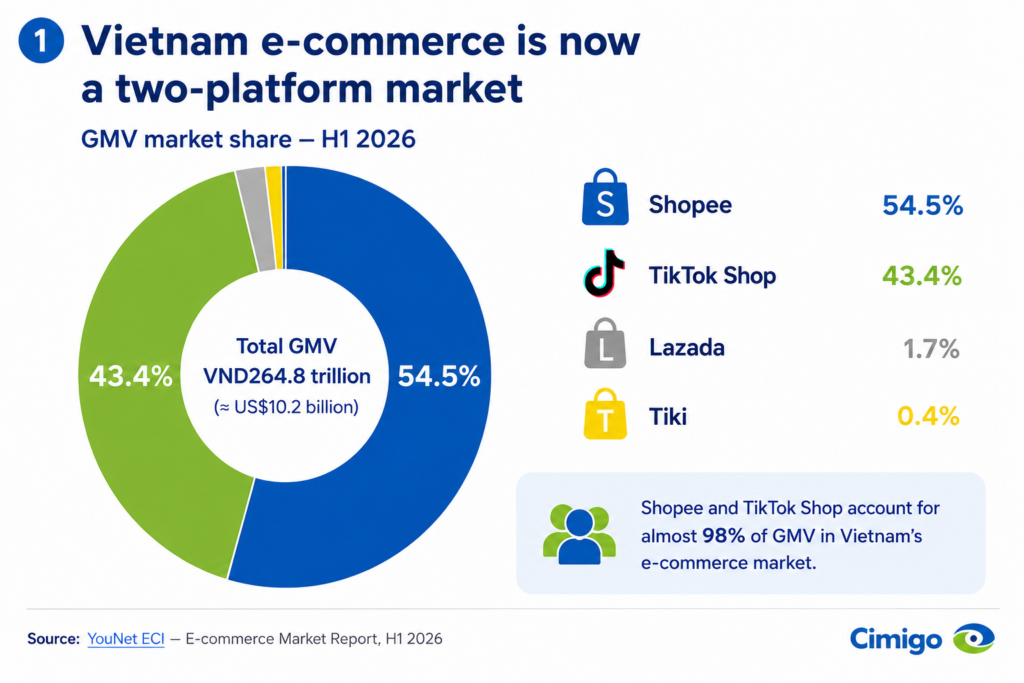
According to YouNet ECI, Vietnam’s four major e-commerce marketplaces generated VND264.8 trillion (approximately US$10.2 billion) in gross merchandise value (GMV) in the first half of 2026. Shopee retained the lead with 54.5% of GMV, while TikTok Shop reached 43.4%. Together, the two platforms now account for almost 98% of the measured market.
Marketplace growth tells only part of the story. Cimigo research shows that shopping increasingly overlaps with media consumption, social discovery, video and entertainment. This is particularly important outside Vietnam’s major cities. Rural consumers are highly engaged with shopping and shoppable content, while their wider media habits differ in important ways from those of urban consumers.
For brands, the question is no longer whether e-commerce matters. The challenge is understanding how consumers discover, evaluate and buy products across an increasingly connected media and commerce journey.
YouNet ECI tracks Shopee, TikTok Shop, Lazada and Tiki, covering more than 2.9 million shops and marketplace activity from January 2024 to June 2026. The market reached VND264.8 trillion in GMV in H1 2026. Shopee generated VND144.3 trillion, up 15% year on year, while TikTok Shop reached VND115 trillion, growing 27%. Lazada generated VND4.4 trillion, down 23%, while Tiki generated VND1.1 trillion, up 33%.
Shopee and TikTok Shop, therefore, dominate Vietnam’s marketplace landscape. Their combined share of almost 98% leaves relatively little room for other platforms, making the relationship between these two ecosystems increasingly important for brands.
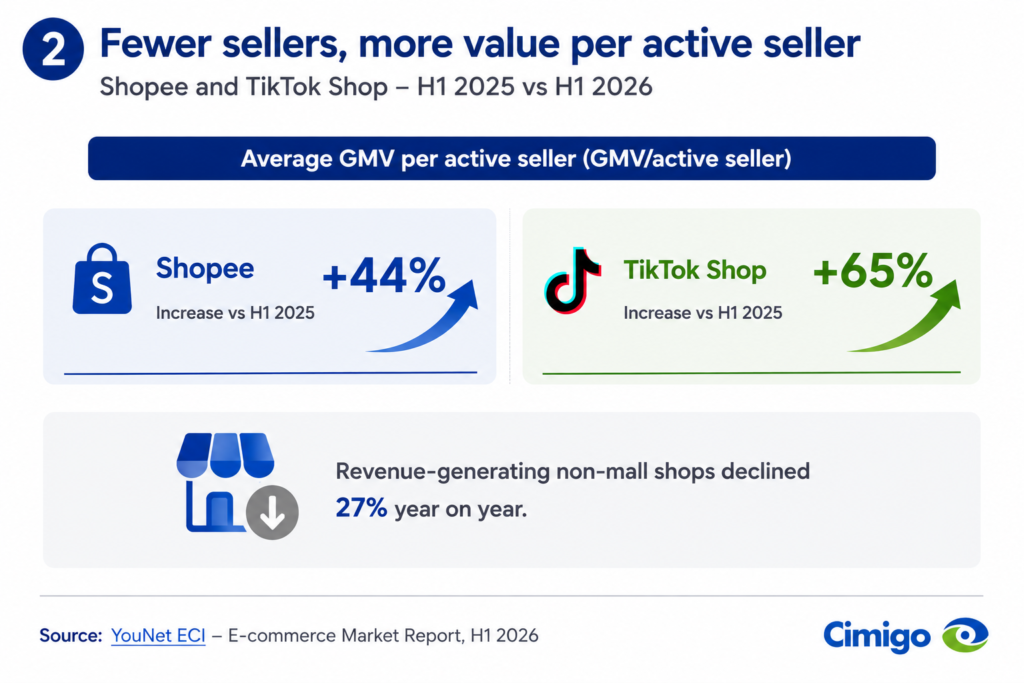
The market is also consolidating among sellers. More than 436,000 shops generated revenue in H1 2026, while the number of revenue-generating non-mall shops fell by approximately 27% year on year, and mall shops declined by approximately 25%.
At the same time, average Gross Merchandise Value (GMV) per active seller increased across all four platforms. Shopee reached VND831.7 million per active seller, up 44% year on year, while TikTok Shop reached VND532.7 million, up 65%.
The Vietnam e-commerce market in 2026 is growing, while fewer sellers capture the available value. Being present on a marketplace is not in itself a route to growth. Brands need to compete for visibility, relevance and conversion within increasingly concentrated platforms.
Marketplace sales data shows where transactions take place. Consumer research reveals the environment in which demand is created.
Cimigo’s Vietnam Media Habits study examines media behaviour nationwide among 1,701 people aged 15 to 44 living in households earning VND10 million or more per month. The research is weighted to reflect geographic and urban-rural population structures.
Vietnamese consumers move across multiple digital environments each day. Facebook, Zalo, TikTok, and YouTube form the core of the daily ecosystem, while consumers use around five to six digital platforms on an average day.
Social media remains the anchor for advertising reach, but it does not work alone. Online shopping platforms are among the strongest channels for adding incremental reach beyond social media.
Shopping itself is also becoming a form of media consumption. In the media habits study, 83% of respondents browsed online shopping or shoppable video during the previous day. Shopping activity extends throughout the day, with consumers returning to shopping and shoppable content around lunchtime and again during the evening from 19:00 to 22:00.
In the content and brand engagement module, shopping was the most widely consumed content category during the previous day, at 79%, ahead of movies, drama series, news and information, and sports.
The distinction between a media platform and a shopping platform is consequently becoming less useful. Commerce environments compete for consumer attention as well as transactions.
Livestream and shoppable video are established parts of online shopping in Vietnam. Cimigo’s Vietnam online shopping insights found 63% of online shoppers engaged with livestream shopping and 53% with shoppable video. The Vietnam Media Habits research places these behaviours within the wider media consumption across the day, showing how commercial content competes alongside social media, short- and long-form video, television and other digital activities.
Vietnam’s online shopping market cannot be understood primarily by looking at Hanoi and Ho Chi Minh City. Cimigo’s online shopping research identifies substantial e-commerce engagement outside the major urban centres, including the importance of rural millennial (aged 31 to 44) women for both online shopping frequency and expenditure.
The Vietnam Media Habits study makes the rural opportunity particularly visible. In the current data, 87% of rural respondents engaged with online shopping or shoppable video during the previous day, compared with 77% of urban respondents. Rural consumers also recorded a higher incidence of long-form video consumption, at 90% compared with 83% among urban consumers.
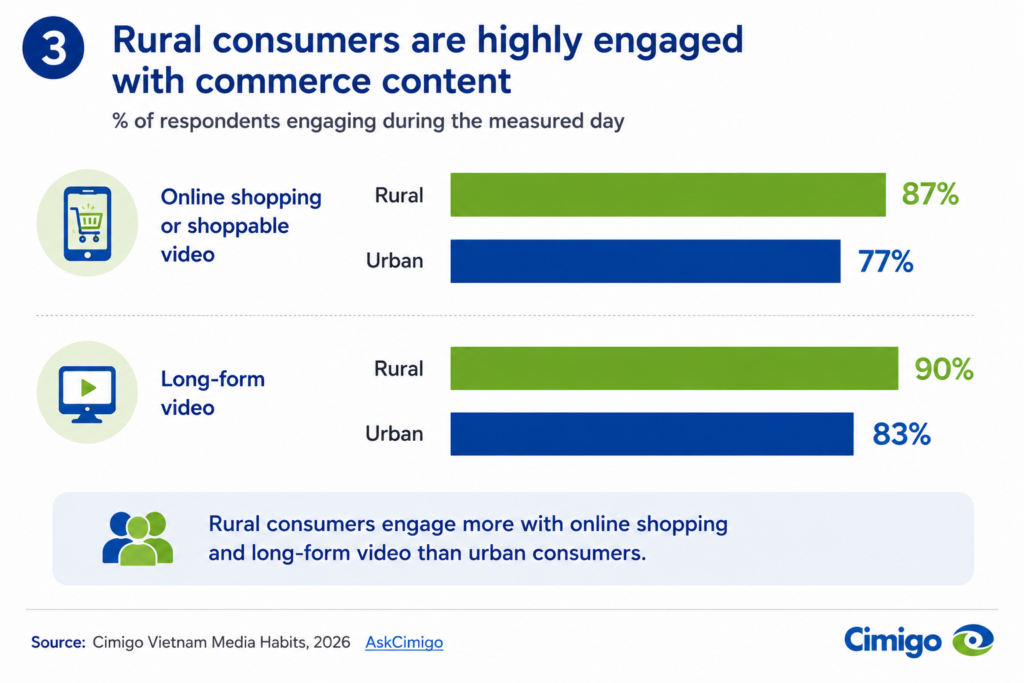
Their media mix differs, too. Social media is the anchor advertising channel across both urban and rural Vietnam. Among rural consumers, however, online shopping platforms provide the strongest incremental reach after social media. Among urban consumers, live TV makes a particularly strong incremental contribution.
This has an important planning implication. Rural e-commerce should not be approached simply by extending an urban digital campaign geographically. Consumers outside major cities are already participating strongly in digital commerce, but the media and commerce channels through which brands reach them differ. Rural strategy needs to reflect these behaviours in audience planning, creative development, media allocation and marketplace activation.
Vietnamese consumers encounter commerce throughout their media day. Cimigo’s media research identifies two periods when multiple media activities strengthen. The first occurs in the late morning and lunchtime, approximately 11:00 to 13:00. The second, stronger convergence occurs in the evening, approximately 19:00 to 22:00.
Online shopping follows this broader rhythm. Browsing begins from around 07:00 and remains active throughout the day, with consumers revisiting shopping content around lunchtime and during the evening. Short-form video follows a similar pattern, with consumption peaking between 11:00 and 14:00 and again between 19:00 and 22:00.
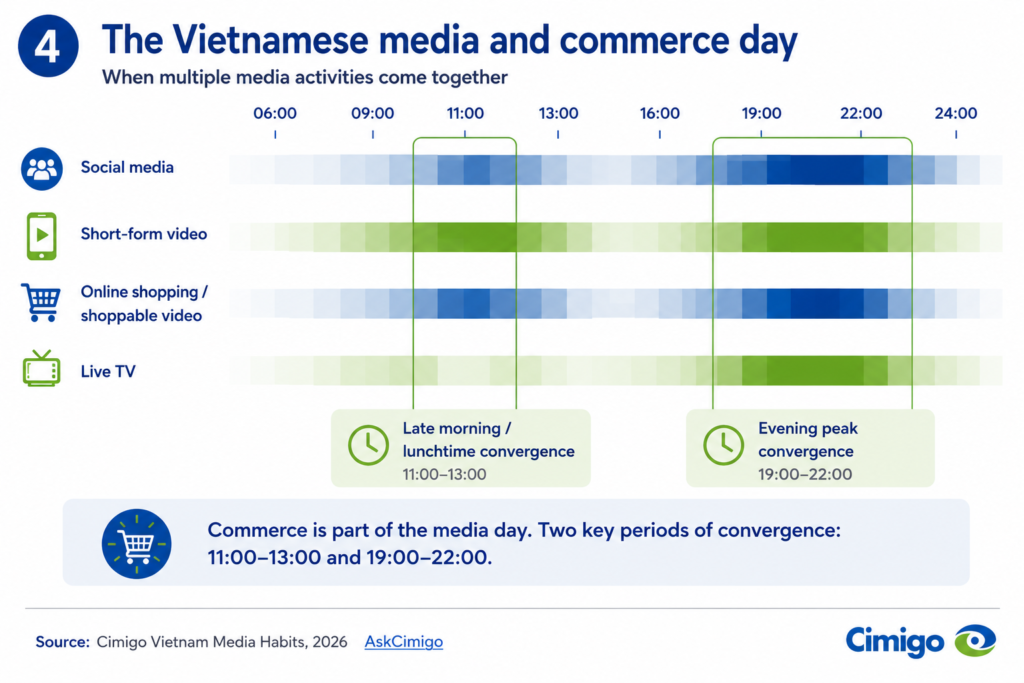
This overlap matters. A consumer watching short-form video, encountering a product recommendation, browsing a marketplace and comparing products may be moving through different stages of the same purchase journey within a relatively short period. For brands, commerce activation and media planning increasingly need to be considered together. The moment of transaction is only one part of the journey.
Shopping content is now part of mainstream media consumption. In Cimigo’s Vietnam Media Habits study, livestream shopping is the most widely consumed shopping content format, reaching 45% of respondents on the previous day. Influencer reviews and recommendations account for 24%. At the same time, beauty tutorials, user-generated content, fashion try-ons, shoppable videos, product unboxing videos, and brand-produced videos and demonstrations all contribute to the commerce-content environment.
There are meaningful generational differences. Gen Z (aged 15 to 30) shows relatively stronger engagement with creator-led formats, including user-generated content and product unboxing videos, while Millennials (aged 31 to 44) show stronger engagement with livestream shopping and shoppable videos.
Livestreaming and shoppable video should therefore not be treated simply as Gen Z formats. Different generations engage with commerce content in different ways, creating opportunities to adapt creative formats, creators, products and calls to action to the audience rather than the platform alone.
Shopee and TikTok Shop now dominate Vietnam’s e-commerce market, together accounting for almost 98% of GMV across the four marketplaces in the Vietnam e-commerce 2026 market, measured by YouNet ECI. The more useful question for brands is not simply which platform is larger, but what role each platform plays as consumers move from discovery to consideration and purchase.
Cimigo online shopping research shows that Shopee is more strongly associated with reliable, planned shopping, while TikTok Shop plays a stronger role in discovery and entertainment-led commerce. At the same time, Vietnamese consumers move across multiple digital environments each day, encountering products through social media, short-form video, creators, livestreams and shopping platforms.
A purchase completed on Shopee may have been stimulated by content encountered on TikTok or elsewhere. Discovery within one environment may also lead consumers into other channels as they compare products, prices and recommendations. Commerce is increasingly a journey across platforms rather than a decision made within a single platform. Brands need to understand where demand is generated and where the eventual transaction occurs.
Average GMV per item increased across all four marketplaces measured by YouNet ECI in H1 2026. Average value rose 43% on Shopee, 10% on TikTok Shop, 40% on Lazada and 38% on Tiki. This is occurring while consumers face greater pressure on household spending; marketplace analysis shows price increases contributing to GMV growth, as unit volumes come under pressure in several categories.
Fast-moving consumer goods (FMCG) stand out as a resilient part of the market. YouNet ECI in H1 2026 reports e-commerce GMV of approximately US$1.8 billion, up 20%, with Home Care and Dairy among the categories maintaining stronger momentum. Essential categories are consequently becoming an important part of the online basket. E-commerce is increasingly competing for shopping occasions that were traditionally associated with supermarkets, convenience stores, and traditional markets and stores. For FMCG brands in particular, marketplaces are becoming environments where availability, visibility, price, trust, and repeat purchase all need to be managed, rather than channels reserved for promotions or occasional discretionary purchases.
Shopping platforms are not simply transaction points. They contribute to advertising reach, discovery, content consumption and conversion. Media planning should consider how social media, video, creators and marketplaces work together rather than allocating them to separate stages of the planning process.
Rural consumers are highly engaged with shopping and shoppable content, but their media mix differs from that of urban audiences. Research, targeting, content and channel planning should reflect these differences rather than treating rural reach as an extension of an urban plan.
TikTok and creator-led commerce are particularly relevant to younger audiences, but livestreaming and shoppable video resonate across generations. Millennials (aged 31 to 44) remain commercially important online shoppers and engage strongly with commerce content.
A marketplace listing optimised only for the final transaction misses much of the journey. Video, creators, demonstrations, reviews and social proof can influence consideration before consumers reach the checkout.
Higher GMV does not necessarily mean consumers are buying more units. Pricing, product mix and higher average transaction values increasingly contribute to marketplace growth. Brands need to understand whether growth comes from additional buyers, increased frequency, higher prices, premiumisation or changes in category mix.
Platform GMV shows where transactions occur. It does not necessarily reveal where demand originated. Combining marketplace intelligence with consumer, media and brand research provides a better basis for understanding how demand is created and converted.
Three developments stand out.
The result is a larger but more demanding e-commerce opportunity. Brands need to understand not only where transactions happen, but how demand is created, how consumers move between platforms and how those journeys differ across Vietnam.
Transaction data can show where a market is growing. Consumer research helps explain the behaviour behind that growth. Cimigo studies consumers across Vietnam to understand how media behaviour, shopping habits, category needs and purchase journeys are changing. Vietnam Media Habits provides a nationwide perspective on how social media, video, commerce, search and other media compete for attention across urban and rural Vietnam.
According to YouNet EC, Shopee, TikTok Shop, Lazada, and Tiki generated VND264.8 trillion (approximately US$10.2 billion) in GMV during H1 2026. Shopee accounted for 54.5% and TikTok Shop 43.4% of the measured market.
Shopee remains the largest marketplace by GMV, accounting for 54.5% of the market, according to YouNet ECI in H1 2026. TikTok Shop accounts for 43.4% and continues to grow at a faster rate. Together, the two platforms account for almost 98% of measured GMV.
Yes. Cimigo research shows strong online shopping engagement outside Vietnam’s major urban centres. In the current Vietnam Media Habits study, 87% of rural respondents engaged with online shopping or shoppable video during the measured day, compared with 77% of urban respondents.
Livestreaming is an established shopping format. Cimigo’s Vietnam Media Habits study currently identifies livestream shopping as the leading shopping content format, reaching 45% of respondents on the measured day. Cimigo’s wider online shopping research also demonstrates substantial engagement with livestream commerce.
Vietnamese consumers move across social media, video, creators, shopping platforms and other digital environments throughout the day. A transaction completed on a marketplace may therefore have been influenced by content encountered elsewhere. Connecting media and commerce research provides a more complete understanding of how demand is created and converted.
YouNet ECI provides the marketplace intelligence used for the H1 2026 GMV, platform, seller and category analysis in this article.
Vietnam online shopping insights explores how Vietnamese consumers shop online, including platform choice, livestream shopping, shoppable video and differences between consumer groups.
TikTok vs Shopee: Gen Z and Millennial e-commerce showdown provides additional analysis of the two platforms and their roles in Vietnam’s e-commerce landscape.
AskCimigo consumer intelligence platform provides access to Cimigo consumer research, including the Vietnam Media Habits report. Visit AskCimigo and interrogate the report with our AI assistant.

Get instant access to syndicated consumer insights, market trends, and competitive intelligence across Vietnam.
If you have any questions or inquiries, please get in touch with us at ask@cimigo.com, or follow Cimigo’s newsletter for more useful insights.

Indonesia consumer trends 2026
Oct 18, 2026
Indonesia consumer trends 2026 Indonesia‘s economy continues to demonstrate resilience in

Vietnam’s consumer outlook 2027
Oct 14, 2026
Vietnam’s consumer outlook 2027: Why strong economic growth does not guarantee consumer
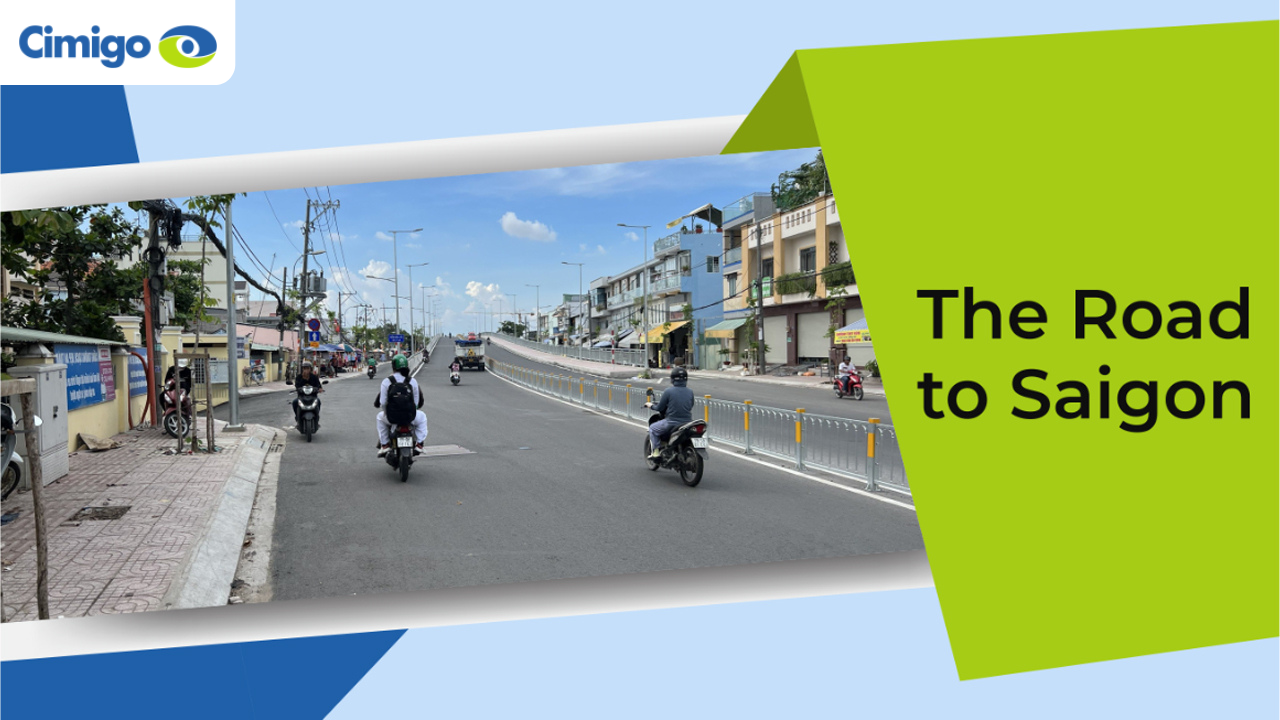
The Road to Saigon
Apr 15, 2025
Watch the Road to Saigon and learn about the stories of the residents. Understand their lives,
Đoàn Ngọc Huy (Johnny Doan), CMO & Market Research Expert -
As a Marketing Director and Market Research Expert Advisor across international markets, I have collaborated with numerous market research agencies, both global and local, that operate with a high level of professionalism and effectiveness. Cimigo is among the most outstanding. The Cimigo team demonstrates exceptional professionalism, strong commitment, and operational excellence. From research design and fieldwork execution to insight analysis, all stages are conducted rigorously, delivered on schedule, and closely aligned with business objectives. This is a highly capable team that I would confidently recommend to my partners and stakeholders.
As a Marketing Director and Market Research Expert Advisor across international markets, I have collaborated with numerous market research agencies, both global and local, that operate with a high level of professionalism and effectiveness. Cimigo is among the most outstanding. The Cimigo team demonstrates exceptional professionalism, strong commitment, and operational excellence. From research design and fieldwork execution to insight analysis, all stages are conducted rigorously, delivered on schedule, and closely aligned with business objectives. This is a highly capable team that I would confidently recommend to my partners and stakeholders.

Lisa Nguyen - Vietnam Marketing Lead

Mark Ratcliff - Managing Director
The team at Cimigo are my favourite researchers in South East Asia. They’ve proved adept at tackling the most private and complex personal issues at qualitative research level, not flinching when the client endlessly chopped and changed fieldwork timing, or ramped up the workload without warning. They have recruited the most extraordinarily niche consumers without pause or complaint. Their patience with clients and their flexibility and hard work that went above and beyond what was initially asked of them on two projects relating to sexual behaviour means there is now no other research company we would choose to work with in that part of Asia. The fact they also pulled off a third project for us so well, on men’s relationship with beer and beer advertising, shows they have breadth of expertise— we still quote from the report they produced.
The team at Cimigo are my favourite researchers in South East Asia. They’ve proved adept at tackling the most private and complex personal issues at qualitative research level, not flinching when the client endlessly chopped and changed fieldwork timing, or ramped up the workload without warning. They have recruited the most extraordinarily niche consumers without pause or complaint. Their patience with clients and their flexibility and hard work that went above and beyond what was initially asked of them on two projects relating to sexual behaviour means there is now no other research company we would choose to work with in that part of Asia. The fact they also pulled off a third project for us so well, on men’s relationship with beer and beer advertising, shows they have breadth of expertise— we still quote from the report they produced.

Kevin McQuillan - Chief Marketing Officer

Sam Houston - Chief Executive Officer

Minh Thu - Consumer Market Insights Manager
Travis Mitchell - Executive Director
Malcolm Farmer - Managing Director
Hy Vu - Head of Research Department

Joe Nelson - New Zealand Consulate General

Steve Kretschmer - Executive Director
York Spencer - Global Marketing Director
Laura Baines - Programmes Snr Manager
Mai Trang - Brand Manager of Romano

Hanh Dang - Product Marketing Manager
Luan Nguyen - Market Research Team Leader
Max Lee - Project Manager
Chris Elkin - Founder

Ronald Reagan - Deputy Group Head After Sales & CS Operation
Chad Ovel - Partner

Private English Language Schools - Chief Executive Officer
Rick Reid - Creative Director

Anya Nipper - Project Coordination Director

Dr. Jean-Marcel Guillon - Chief Executive Officer
Joyce - Pricing Manager

Matt Thwaites - Commercial Director

Aashish Kapoor - Head of Marketing

Kelly Vo - Founder & Host
Thanyachat Auttanukune - Board of Management
Hamish Glendinning - Business Lead

Thuy Le - Consumer Insight Manager
Richard Willis - Director

Ha Dinh - Project Lead
Geert Heestermans - Marketing Director

Vo Thi Thuy Ha - Commercial Effectiveness

Louise Knox - Consumer Technical Insights

Aimee Shear - Senior Research Executive
Dennis Kurnia - Head of Consumer Insights
Tania Desela - Senior Product Manager
Thu Phung - CTI Manager
Linda Yeoh - CMI Manager

 Team
Team
Cimigo’s market research team in Vietnam and Indonesia love to help you make better choices.
 Solutions
Cimigo provides market research solutions in Vietnam and Indonesia that will help you make better choices.
 Trends
Cimigo provides a range of consumer marketing trends and market research on market sectors and consumer segments in Vietnam and Indonesia.
 Reports
Cimigo provides a range of free market research reports on market sectors and consumer segments in Vietnam and Indonesia.