The Road to Saigon
Apr 15, 2025
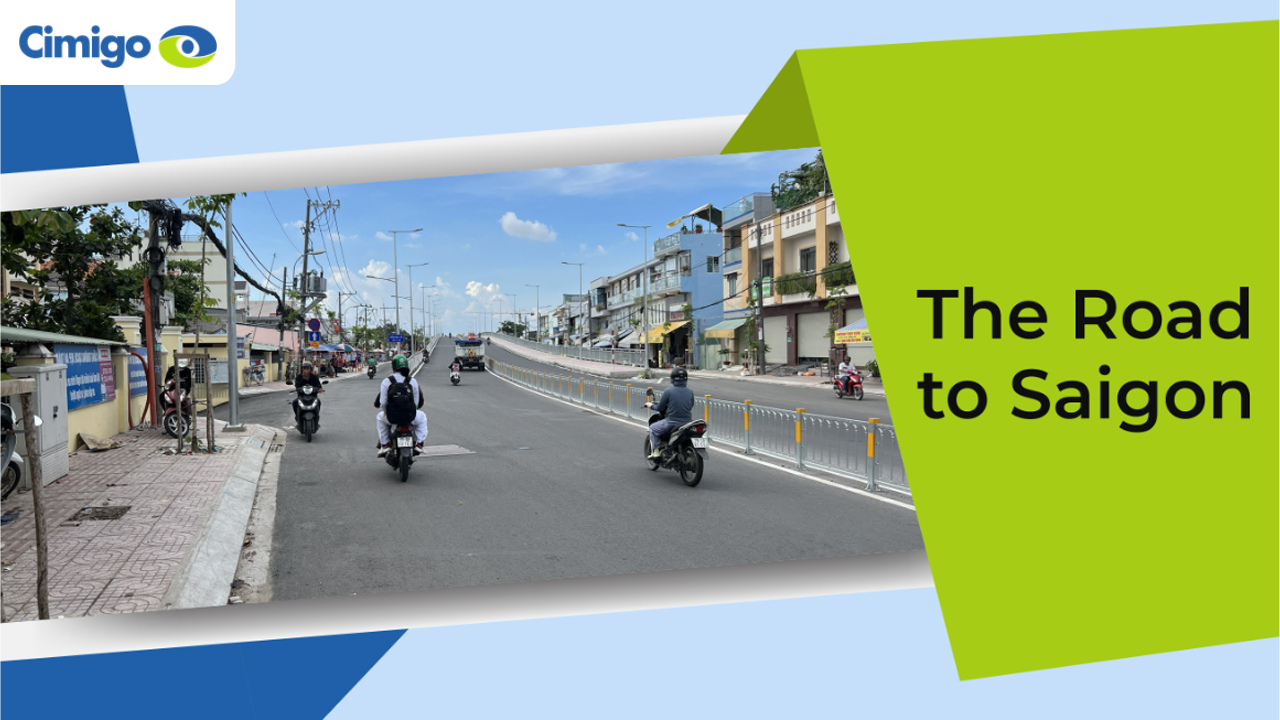
Watch the Road to Saigon and learn about the stories of the residents. Understand their lives,

Indonesia consumer trends 2026
 Admin
 Oct 18, 2026
Indonesia consumer trends 2026 show a tension between steady economic growth and more cautious household spending. Rising living costs, employment concerns and global uncertainty are influencing spending decisions, even as digital adoption and investment continue to expand.
This article examines seven trends shaping Indonesia’s consumers and economy in 2026, and the opportunities and challenges they create for businesses in a more selective marketplace.
10-minute read
In Q2 2026, Indonesia’s GDP grew by 5.29% year on year, according to the BPS-Statistics Indonesia release, bringing quarterly GDP to US$365 billion. Growth was supported mainly by accommodation, food and beverage, and utilities, alongside a recovery in manufacturing activity.
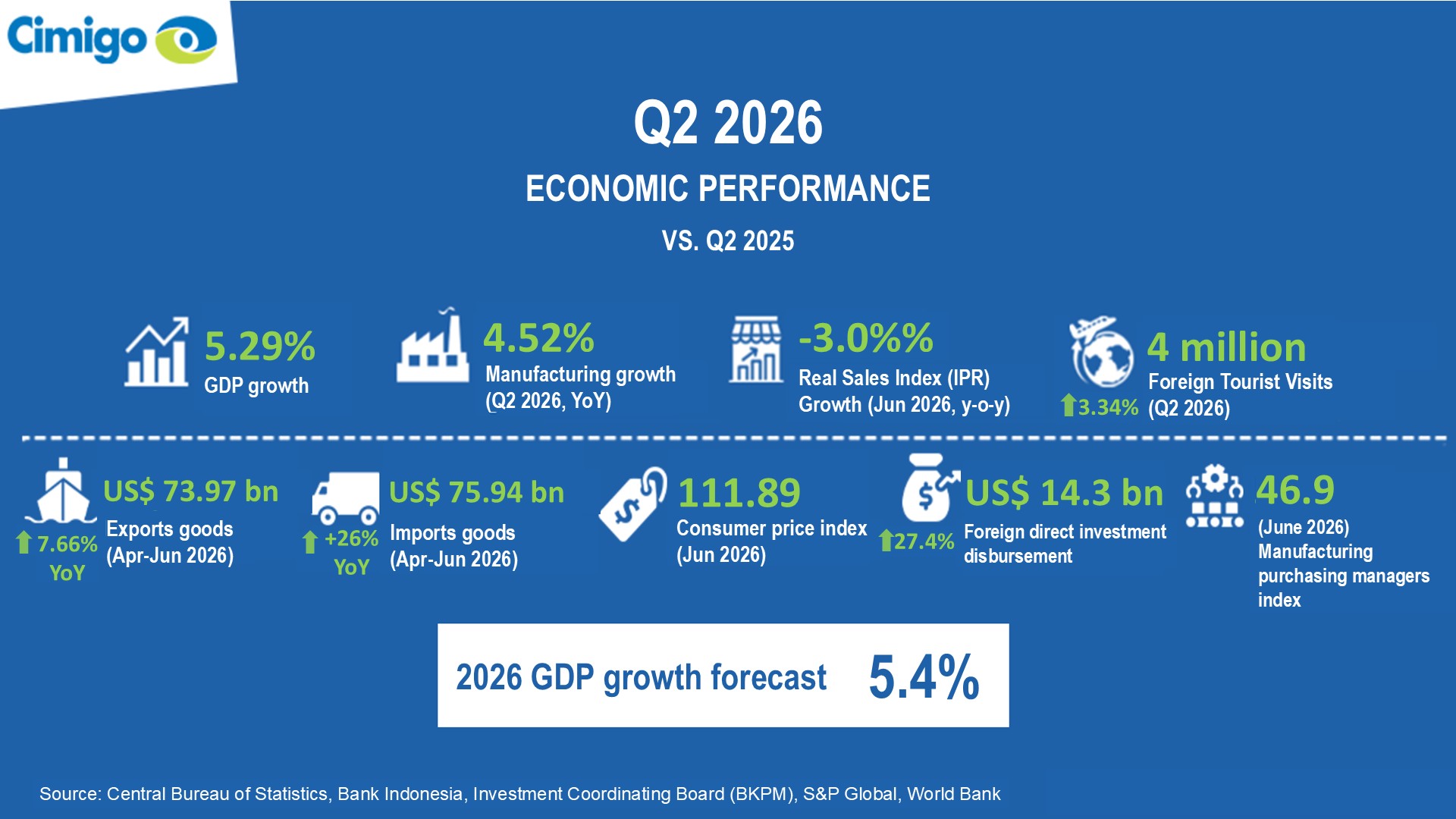
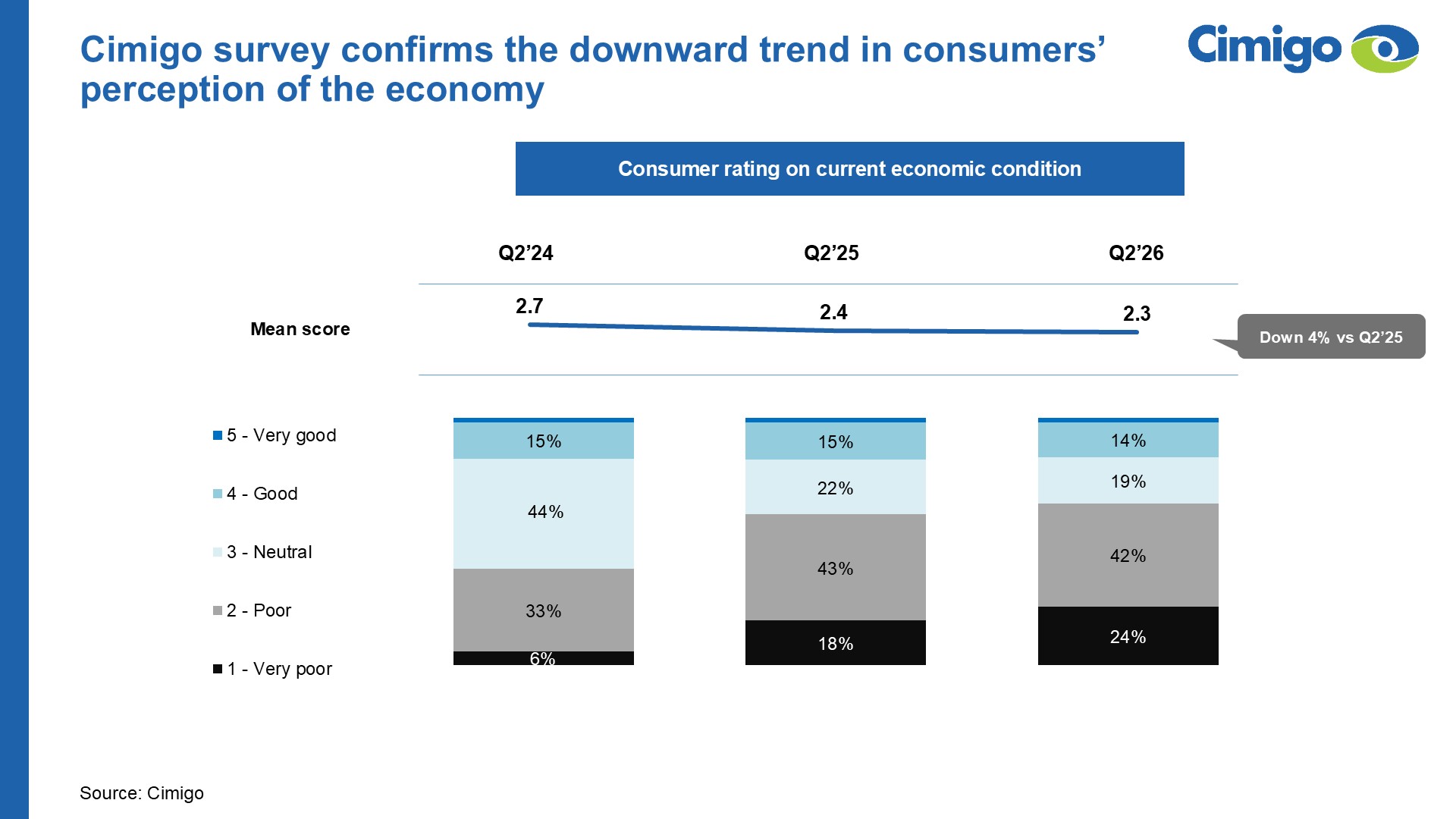
Despite rising domestic production, consumer confidence is being tested by several headwinds. Geopolitical tensions have contributed to a persistent depreciation of the Indonesian rupiah against the US dollar. Cimigo survey data also points to cooling consumer sentiment, with households increasingly concerned about the cost of living and a tighter job market.
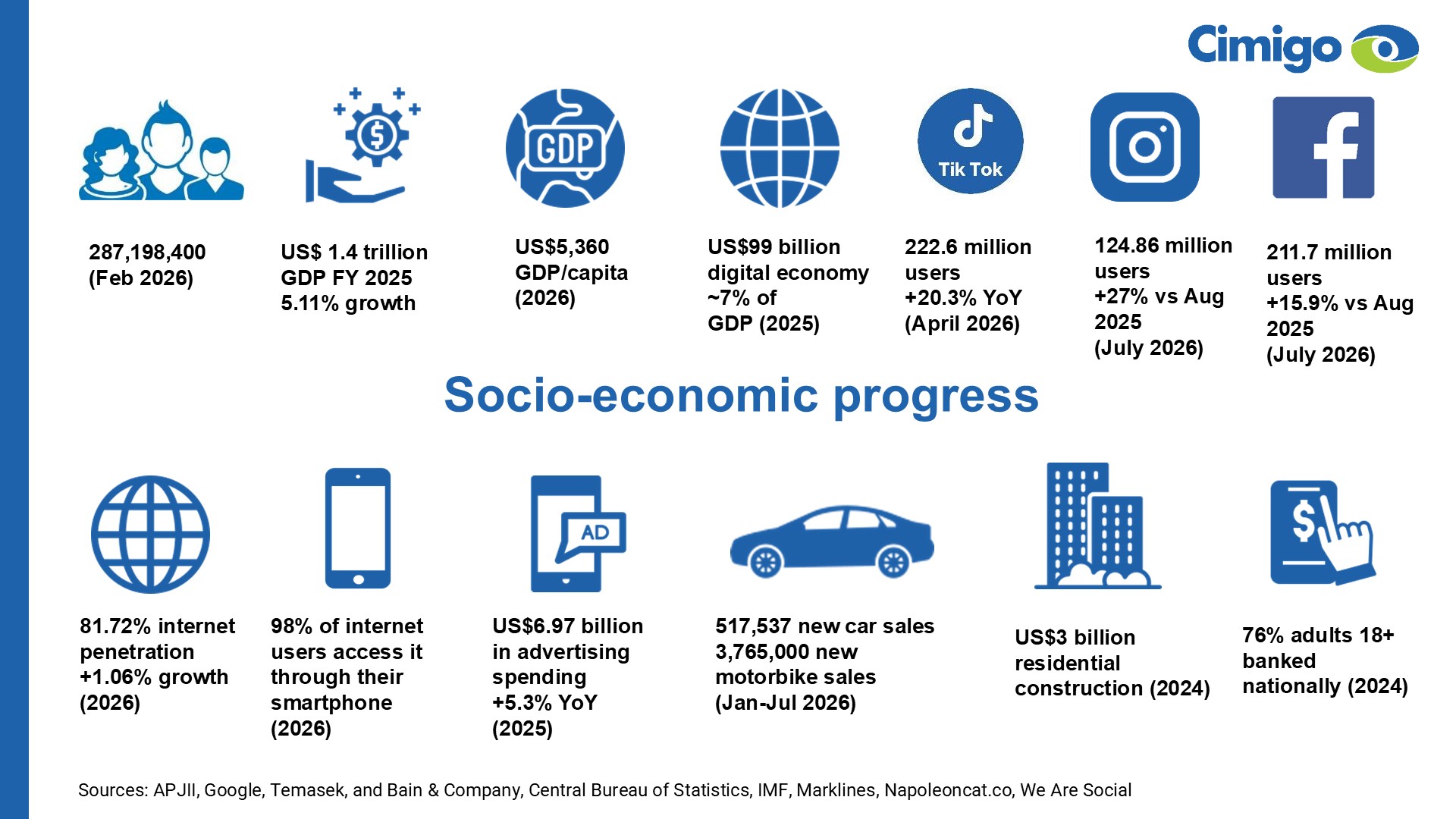
Full-year GDP growth is forecast to reach 5.4%. Other indicators include inflation of 2.88%, a retail sales index 2.1 points above July 2025, and foreign investment up 27.4% compared with Q2 2025. Indonesia’s young population supports longer-term growth potential. The country’s broader socio-economic progress is also reflected in internet penetration of 81.72%, increased social media use and a digital economy valued at US$99 billion.
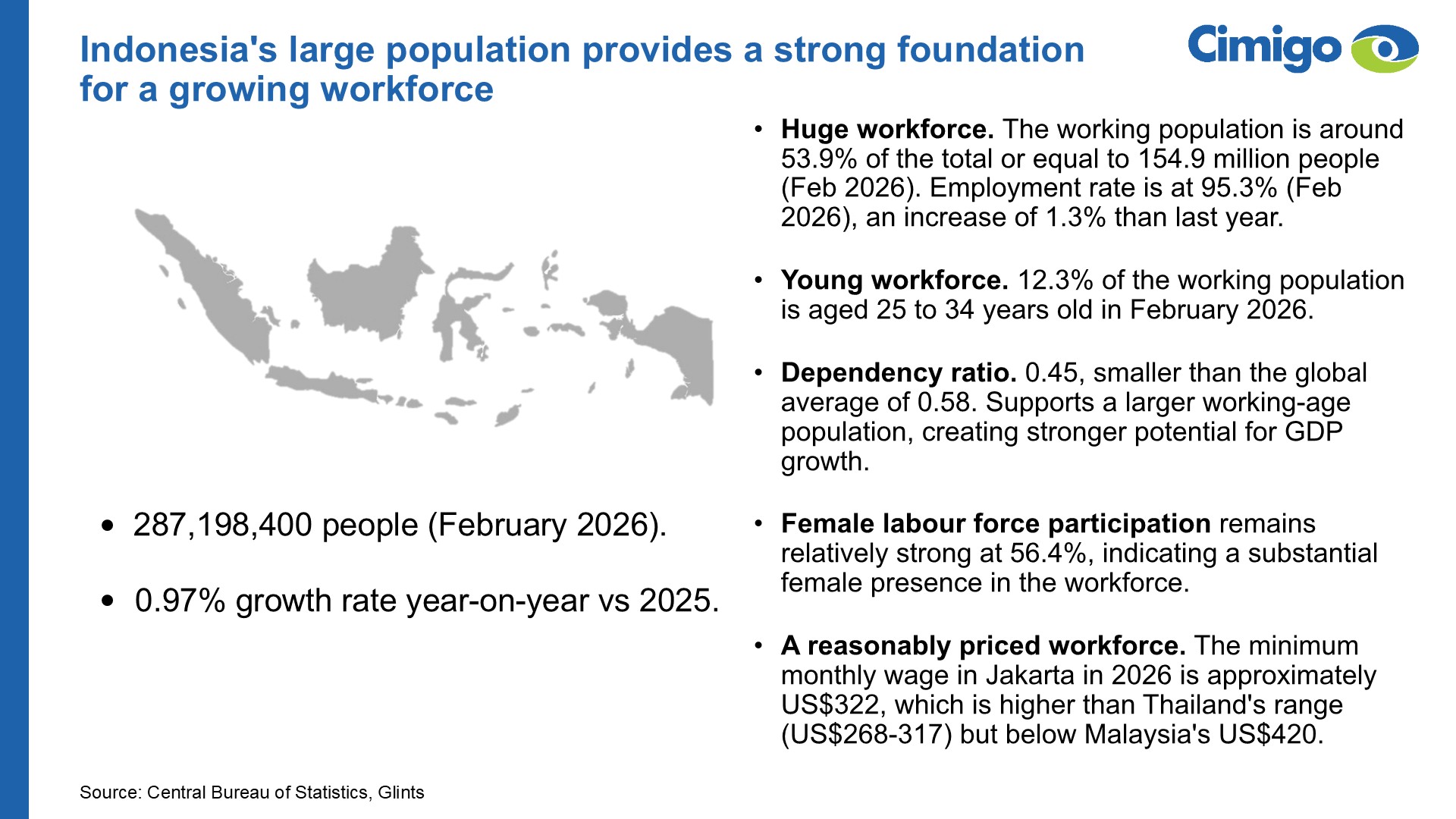
Indonesia’s population has reached 287 million, with 53.9% in the productive-age bracket and a dependency ratio of 0.45. The job market remains stable: the employment rate, including part-time employment, is 95.3%, while female labour force participation stands at 56.4%. Urban migration is also reshaping consumer behaviour, with more than 66% of Indonesians projected to live in urban areas by 2035. These demographic shifts will continue to shape the country’s consumer market.
Indonesians spend an average of 7 hours and 22 minutes online each day. This is helping fuel a digital economy that reached US$99 billion in 2025, up 14% year on year, largely through e-commerce. Mobile-first behaviour is widespread, with 98% of internet users accessing the internet via smartphones. These shifts are among the most visible consumer trends in Indonesia in 2026.
Digital adoption is changing how people shop, pay and access entertainment. E-commerce platforms are now part of everyday life, and many consumers order groceries online each week. Purchasing behaviour has shifted towards digital channels for everything from household essentials to travel.
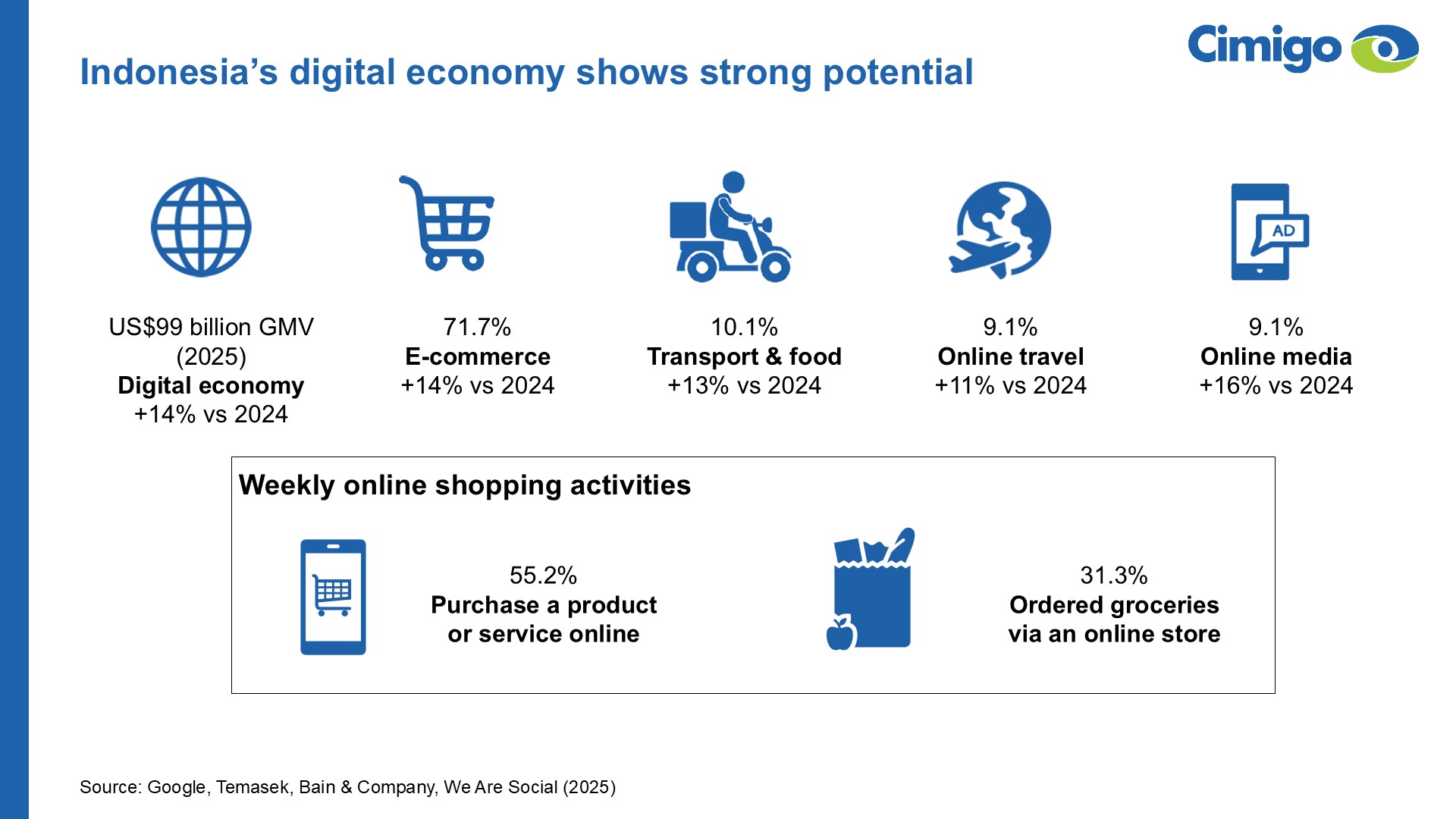
Securing additional income is the leading financial goal, followed by reducing non-essential spending. Consumers are prioritising value for money through discounts, multifunctional products and locally produced goods. At the same time, they are building wealth: activity on digital wealth platforms grew by 25% year on year, and the number of stock market investors passed 20 million. This value-first mindset is a defining feature of consumer behaviour in Indonesia in 2026.
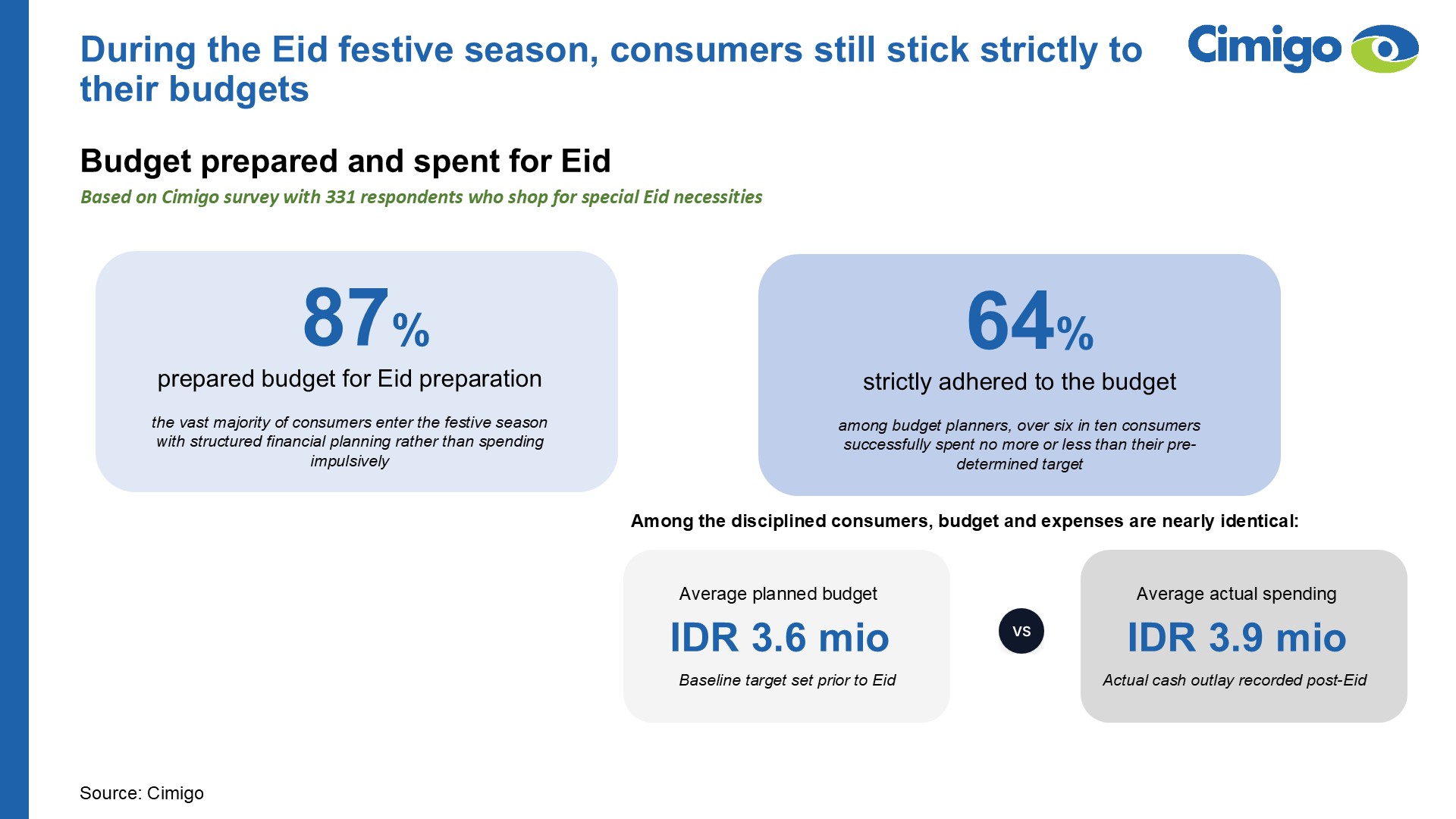
This cautious approach is also visible during Eid, a period traditionally associated with increased spending. Some 87% of consumers now prepare a budget in advance, and 64% say they stick to it. The average planned Eid budget was IDR 3.6 million, compared with actual spending of IDR 3.9 million. The relatively small gap suggests households are managing festive spending carefully, although actual expenditure still exceeds plans.
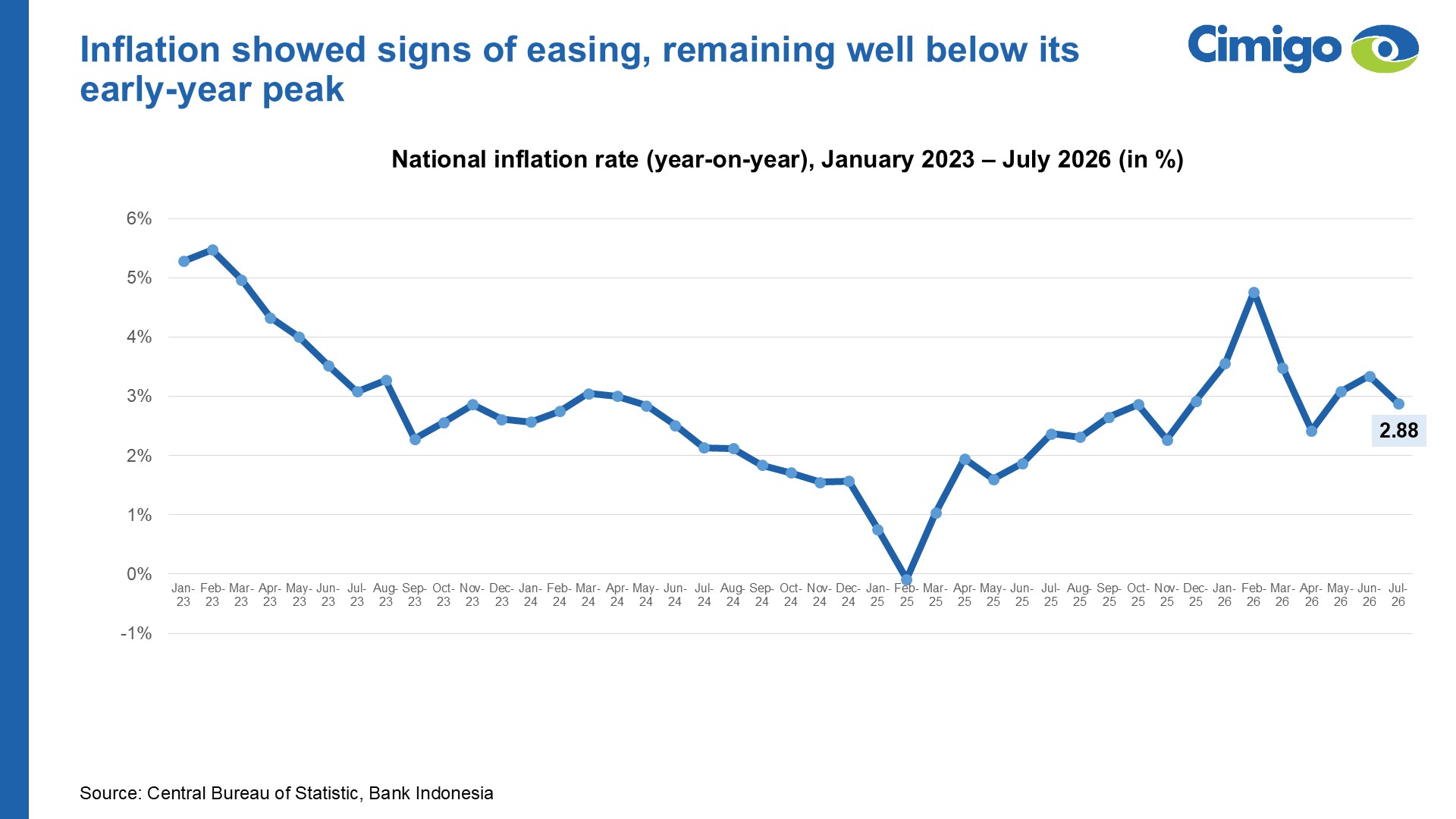
Inflation has eased from its early-year peak and stands at 2.88%. Retail sales continue to grow steadily, supported by essential categories such as food, beverages, tobacco, and automotive parts and accessories. The digital marketplace is also expanding, with the number of e-commerce businesses in Indonesia reaching 4 million. Together, these figures point to steady consumer spending, with value continuing to matter.
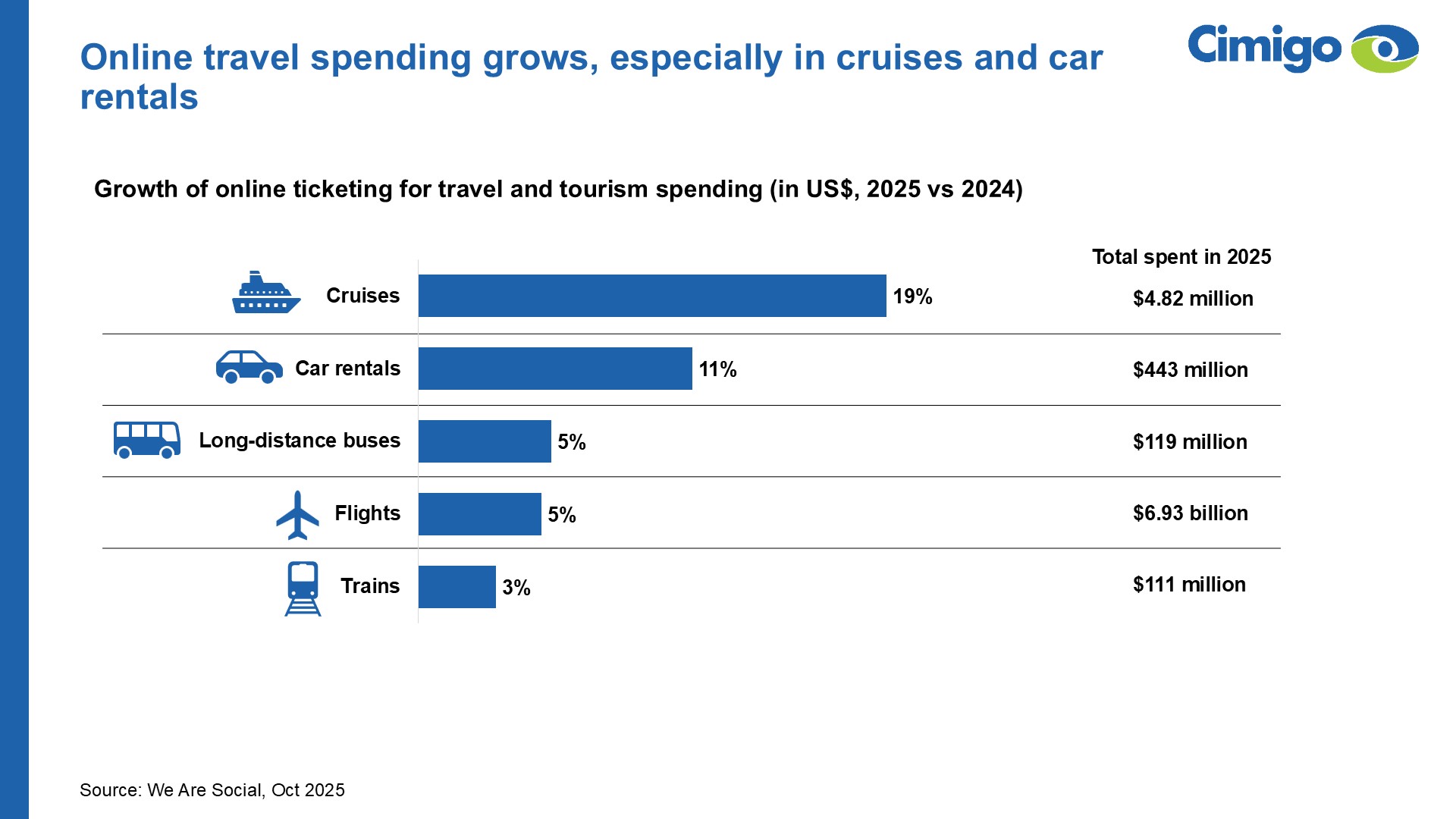
International tourist arrivals reached 4.2 million in Q2 2026, up 3.34% year on year. Online travel spending also increased, particularly on cruises and car rentals. However, government spending restraint has affected the travel and meetings sectors. Midscale hotels in Jakarta recorded a 2.6% decline in occupancy as government-driven events fell. Five-star hotels performed better, with occupancy up 4.5% in the first half of 2026 compared with the same period in 2025. These shifts add another dimension to changing consumer behaviour in Indonesia.
Investment is flowing into basic metals, mining, transportation, warehousing, telecommunications, and housing and industrial estates. Singapore, Hong Kong and China are among the leading sources. The Business Tendency Index also improved in Q2 2026, signalling greater corporate confidence in revenue, production capacity and profit margins. These investment trends add context to the consumer trends shaping Indonesia’s market.
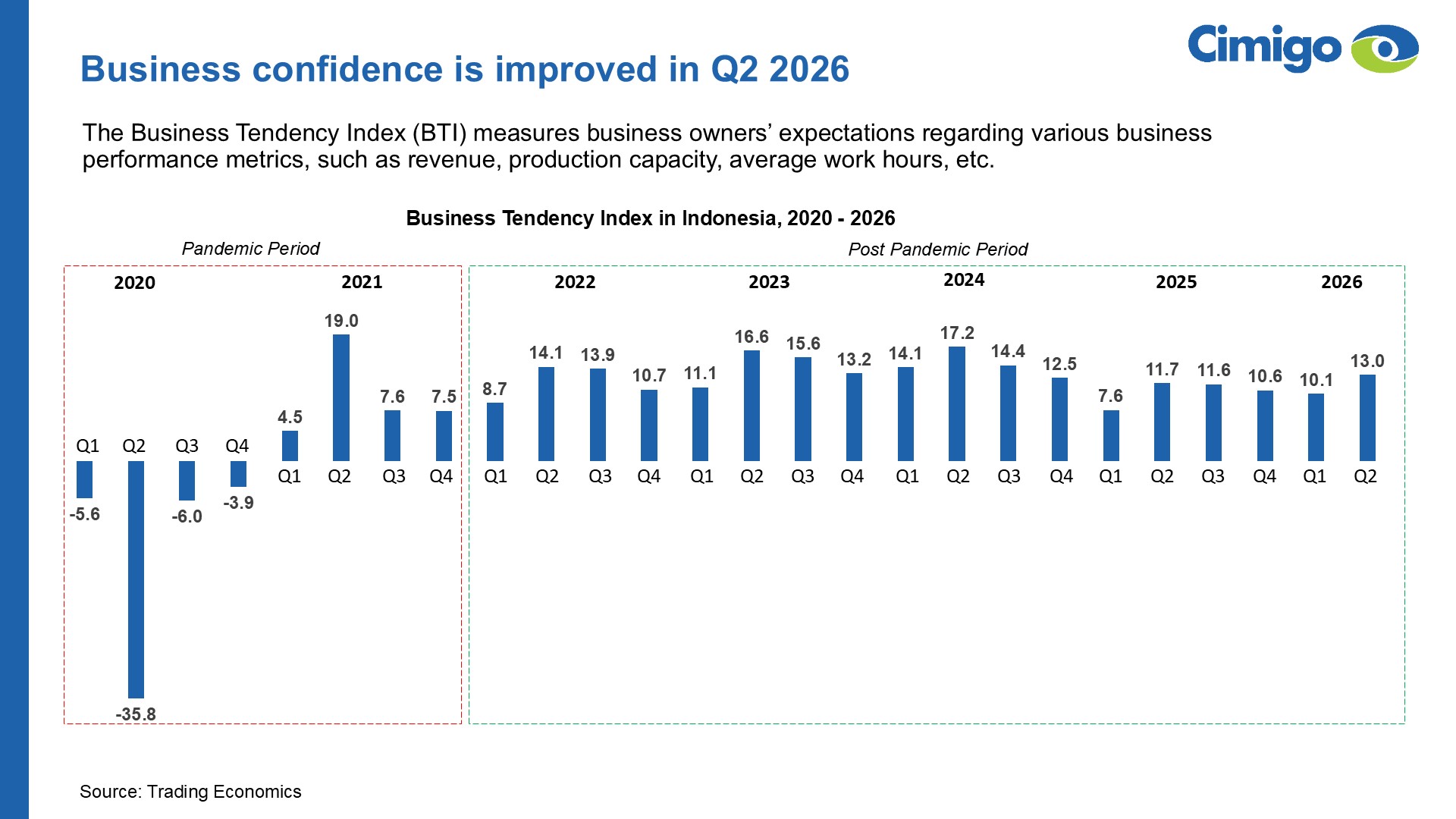
Indonesia’s socio-economic structure reveals growing financial vulnerability. Between 2018 and 2024, the proportion of the middle class declined from 22.5% to 17.1%. This suggests that although consumer confidence remains relatively positive, a growing share of Indonesians have limited financial buffers, making them increasingly cautious and price-sensitive in their spending.
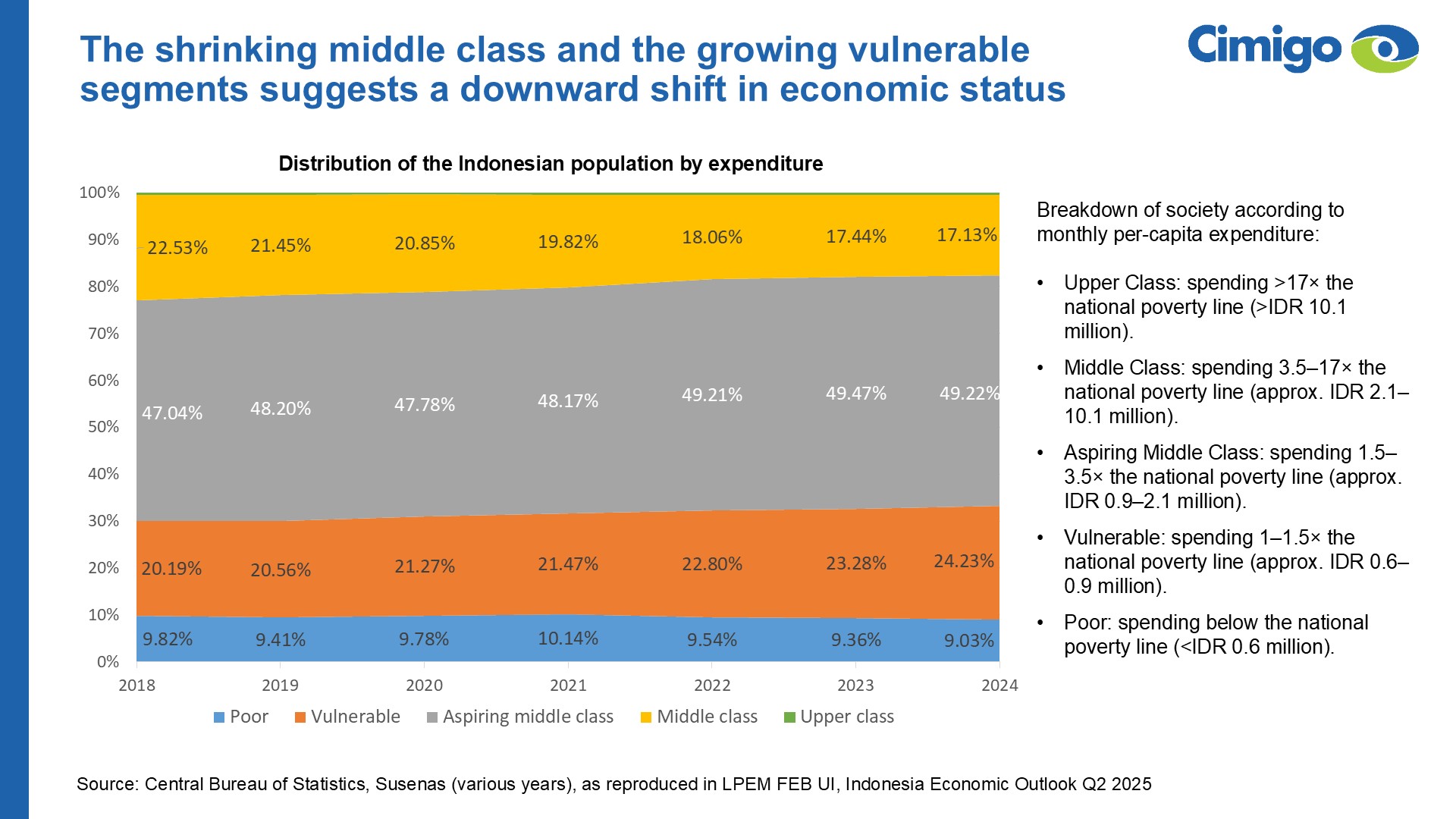
Despite these challenges, Cimigo’s survey indicates that Indonesians remain optimistic about the prospect of long-term economic recovery.
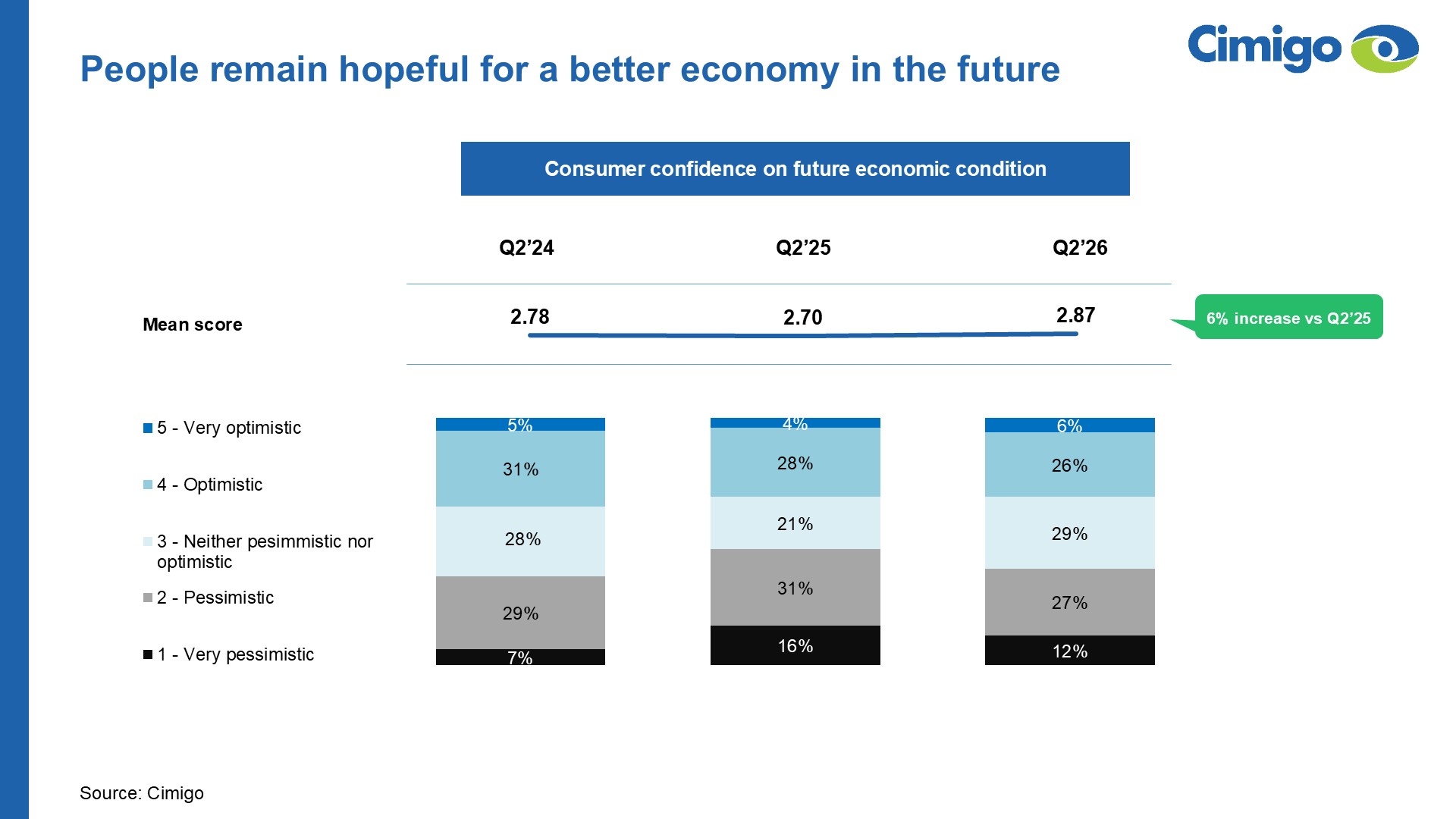
Indonesia is navigating geopolitical tensions and changing economic conditions, yet its market fundamentals remain resilient. A large working-age population, wider digital adoption and increased foreign investment support continued momentum, with full-year GDP growth projected at 5.4%.
Consumers continue to face cost pressures, and business sentiment remains measured. In response, many households are budgeting carefully, seeking additional income and showing greater interest in wealth-building. At the same time, a strong manufacturing sector and inflation of 2.88% provide a foundation for future business growth.
For brands and marketers, success will depend on understanding changing priorities, delivering clear value and adapting to more considered purchasing decisions. Indonesia’s consumer market in 2026 is defined not only by resilience, but also by how households respond to uncertainty while pursuing better lives.
If you have questions or specific needs, please contact us at ask@cimigo.com.

The Road to Saigon
Apr 15, 2025
Watch the Road to Saigon and learn about the stories of the residents. Understand their lives,
Indonesia consumer trends 2026
Oct 18, 2026
Indonesia consumer trends 2026 show a tension between steady economic growth and more cautious
Vietnam’s consumer outlook 2027
Oct 14, 2026
Vietnam’s consumer outlook 2027: Why strong economic growth does not guarantee consumer
Đoàn Ngọc Huy (Johnny Doan), CMO & Market Research Expert -
As a Marketing Director and Market Research Expert Advisor across international markets, I have collaborated with numerous market research agencies, both global and local, that operate with a high level of professionalism and effectiveness. Cimigo is among the most outstanding. The Cimigo team demonstrates exceptional professionalism, strong commitment, and operational excellence. From research design and fieldwork execution to insight analysis, all stages are conducted rigorously, delivered on schedule, and closely aligned with business objectives. This is a highly capable team that I would confidently recommend to my partners and stakeholders.
As a Marketing Director and Market Research Expert Advisor across international markets, I have collaborated with numerous market research agencies, both global and local, that operate with a high level of professionalism and effectiveness. Cimigo is among the most outstanding. The Cimigo team demonstrates exceptional professionalism, strong commitment, and operational excellence. From research design and fieldwork execution to insight analysis, all stages are conducted rigorously, delivered on schedule, and closely aligned with business objectives. This is a highly capable team that I would confidently recommend to my partners and stakeholders.
Lisa Nguyen - Vietnam Marketing Lead
Mark Ratcliff - Managing Director
The team at Cimigo are my favourite researchers in South East Asia. They’ve proved adept at tackling the most private and complex personal issues at qualitative research level, not flinching when the client endlessly chopped and changed fieldwork timing, or ramped up the workload without warning. They have recruited the most extraordinarily niche consumers without pause or complaint. Their patience with clients and their flexibility and hard work that went above and beyond what was initially asked of them on two projects relating to sexual behaviour means there is now no other research company we would choose to work with in that part of Asia. The fact they also pulled off a third project for us so well, on men’s relationship with beer and beer advertising, shows they have breadth of expertise— we still quote from the report they produced.
The team at Cimigo are my favourite researchers in South East Asia. They’ve proved adept at tackling the most private and complex personal issues at qualitative research level, not flinching when the client endlessly chopped and changed fieldwork timing, or ramped up the workload without warning. They have recruited the most extraordinarily niche consumers without pause or complaint. Their patience with clients and their flexibility and hard work that went above and beyond what was initially asked of them on two projects relating to sexual behaviour means there is now no other research company we would choose to work with in that part of Asia. The fact they also pulled off a third project for us so well, on men’s relationship with beer and beer advertising, shows they have breadth of expertise— we still quote from the report they produced.
Kevin McQuillan - Chief Marketing Officer
Sam Houston - Chief Executive Officer

Minh Thu - Consumer Market Insights Manager
Travis Mitchell - Executive Director
Malcolm Farmer - Managing Director
Hy Vu - Head of Research Department
Joe Nelson - New Zealand Consulate General
Steve Kretschmer - Executive Director
York Spencer - Global Marketing Director
Laura Baines - Programmes Snr Manager
Mai Trang - Brand Manager of Romano
Hanh Dang - Product Marketing Manager
Luan Nguyen - Market Research Team Leader
Max Lee - Project Manager
Chris Elkin - Founder
Ronald Reagan - Deputy Group Head After Sales & CS Operation
Chad Ovel - Partner

Private English Language Schools - Chief Executive Officer
Rick Reid - Creative Director
Anya Nipper - Project Coordination Director

Dr. Jean-Marcel Guillon - Chief Executive Officer
Joyce - Pricing Manager

Matt Thwaites - Commercial Director
Aashish Kapoor - Head of Marketing
Kelly Vo - Founder & Host
Thanyachat Auttanukune - Board of Management
Hamish Glendinning - Business Lead

Thuy Le - Consumer Insight Manager
Richard Willis - Director

Ha Dinh - Project Lead
Geert Heestermans - Marketing Director
Vo Thi Thuy Ha - Commercial Effectiveness

Louise Knox - Consumer Technical Insights
Aimee Shear - Senior Research Executive
Dennis Kurnia - Head of Consumer Insights
Tania Desela - Senior Product Manager
Thu Phung - CTI Manager
Linda Yeoh - CMI Manager

 Team
Cimigo’s market research team in Vietnam and Indonesia love to help you make better choices.
 Solutions
Cimigo provides market research solutions in Vietnam and Indonesia that will help you make better choices.
 Trends
Cimigo provides a range of consumer marketing trends and market research on market sectors and consumer segments in Vietnam and Indonesia.
 Reports
Cimigo provides a range of free market research reports on market sectors and consumer segments in Vietnam and Indonesia.