Visit AskCimigo and interrogate our reports with our AI assistant.
Indonesia’s economic outlook Q4 2025
Apr 04, 2026
Indonesia concluded 2025 with steady economic growth and resilient underlying fundamentals,

Vietnam’s growth story: From catch-up growth to disciplined growth
 Richard Burrage
 Feb 05, 2026
Vietnam’s economy behaves like a more mature economy than its income levels suggest. Vietnam’s growth story needs reframing. Vietnam is transitioning from catch-up growth to a phase of disciplined, productivity-led growth, where confidence and value capture matter more than speed.
This article is based on the Vietnam Consumer Trends 2026 report from Cimigo.
Vietnam’s next challenging phase of growth has already begun, and it will reward depth, trust, and long-term commitment over short-term opportunism.
For more than a decade, Vietnam has been framed as one of Asia’s most compelling growth stories. Substantial GDP expansion, a favourable demographic profile, rising household incomes, and deepening global integration have reinforced expectations of accelerating consumption and sustained economic momentum. By conventional measures, the country appears firmly on track toward its stated ambition to reach high-income status by 2045.
Vietnam’s GDP per capita reached approximately US$4,900 in 2025, yet consumer behaviour increasingly resembles that of far more mature economies.
Yet beneath these headline indicators lies a quieter, more consequential shift. Vietnamese consumer behaviour today looks less like that of an early-stage growth economy and more like that of a society already transitioning into economic maturity. Spending restraint, elevated savings, cautious upgrading, and a pronounced tilt toward security over aspiration all suggest that Vietnam has entered a more complex phase of development than income metrics alone would imply.
This is not a story of stalled growth. It is a story of misaligned expectations.
Household incomes in Vietnam are rising, and the consuming middle class now accounts for a majority of households. Yet confidence has not recovered to pre-2019 levels. Consumer sentiment remains subdued, savings rates have increased, and discretionary spending continues to be approached with caution.
Household savings rates have risen from an estimated ~8.5% pre-2019 to ~10% in 2025, despite income growth.
This disconnect is often misinterpreted as temporary or cyclical. In reality, it reflects a structural shift in how households perceive risk. COVID-19 scarring, income volatility, and the rising salience of healthcare and education costs have fundamentally altered household decision-making. Growth is acknowledged, but it is not yet trusted.
At a macro level, this matters. When confidence lags income, the transmission mechanism from economic growth to domestic demand weakens. Consumption no longer accelerates automatically alongside GDP. Instead, households prioritise buffers and resilience.
Income growth without confidence does not accelerate consumption; it delays it.
Vietnam’s economy is not suffering from a lack of income growth; a lack of income security constrains it.
Vietnam’s push toward digitisation, modern trade, financial transparency, and administrative reform is economically rational and strategically necessary. Informality has long diluted productivity, tax efficiency, and policy effectiveness. Formalisation strengthens institutions, improves data quality, and raises long-term growth potential.
Modern trade and e-commerce now account for ~44% of retail sales, while digital payments dominate, with bank apps used in ~40% of the latest transactions.
But formalisation also removes informal shock absorbers that households have historically relied upon. As income becomes more visible, transactions more traceable, and compliance more systematic, financial pressure becomes more felt, even as household incomes rise.
This creates a paradox. Structural reforms that improve long-term economic health can undermine short-term confidence if credible safety nets and income predictability are not in place. The resulting behaviour, cautious spending, higher savings, heightened sensitivity to policy signals, is not resistance to progress. It is a rational adaptation.
Vietnam is experiencing the political and economic trade-offs of success earlier than expected.
In many economies, the transition from aspirational consumption to security-oriented behaviour occurs at significantly higher income levels. Vietnam is experiencing this shift far earlier in its development.
Vietnamese households are prioritising savings, income visibility, and financial buffers over discretionary upgrades, a behavioural shift typically seen at much higher income levels.
Households are no longer optimising for visible upgrading. Instead, they are rebuilding savings, delaying large purchases, and approaching credit more deliberately. Financial engagement is increasing, but tolerance for instability is declining.
This matters strategically because it alters the shape of demand. Growth does not disappear; it reallocates. The economy becomes less exuberant, more selective, and more sensitive to shocks. This is not stagnation; it is managed growth and risk.
Vietnam is not failing to become a consumption economy. It is becoming more cautious.
Retail demand only tells us part of the story. Consumer spending is shifting structurally toward services and experiences, earlier than income models would predict.
Retail goods volume growth has flattened, while services and experiences are growing at double-digit rates. Retail sales of goods and services account for ~60% of GDP, but goods are no longer the primary driver of growth.
Consumption growth in Vietnam is shifting structurally toward services and experiences. Travel, leisure, health, education and experiential categories are absorbing incremental household spending earlier than income models would predict. Retail goods volumes, once a dependable proxy for consumer momentum, are no longer sufficient to diagnose economic vitality.
Vietnam’s retail and distribution landscape is now split between traditional trade (56%) and modern and digital channels (44%). E-commerce, livestream shopping, modern trade and platform-driven discovery have fundamentally altered how demand is created and captured.
Modern trade’s share of retail has risen from ~15% in 2005 to ~32% in 2025, while e-commerce now accounts for ~12% of retail goods sales.
This fragmentation is often framed as inefficiency or transitional. In reality, it is becoming a structural feature of the economy. It weakens pricing power, intensifies promotion, leads to competition, and changes how inflation and growth propagate through the system.
At a macro level, fragmentation dampens both exuberance and systemic risk. Growth becomes less concentrated, less predictable, and less explosive, but also more resilient.
Vietnamese households are engaging with finance at an unprecedented scale. Credit, equities, Buy Now Pay Later (BNPL), and digital financial services are now mainstream. This deepening expands opportunity, improves capital allocation, and supports long-term growth.
Consumer finance reached approximately US$113 bn in 2024, equivalent to ~26% of GDP and ~58% of retail goods sales. BNPL grew ~26% year-on-year, reaching nearly US$3 bn. Domestic stock trading accounts increased by ~29% in a single year.
But deeper financial participation also raises exposure. As household budgets become more financially active, sensitivity to asset cycles, interest rates, and policy signals increases. Confidence shocks now transmit faster and more broadly across the economy.
Vietnam is becoming a more reflexive economy. Growth will increasingly depend not just on fundamentals, but on credibility, communication, and institutional trust.
While Vietnam’s demographic dividend remains intact today, ageing is no longer a distant concern. Population ageing is already reallocating demand away from goods toward health, services, and convenience.
The over-50 population has grown from ~18% in 2010 to ~28% in 2026 and is the fastest-growing age segment going forward.
This shift dampens visible consumption growth. The implication is uncomfortable but clear: productivity must replace demographics as the primary growth engine sooner than expected. Vietnam is not approaching its growth limits; it is approaching a change in how growth must be generated.
Vietnam’s next phase of growth will be constrained less by income and more by confidence, productivity, and institutional credibility.
What we are observing is not hesitation, but maturity. Not underperformance, but recalibration. Confidence, productivity, and institutional depth now matter more than speed.
For policymakers, this means sequencing reforms to protect confidence while raising efficiency. For business leaders, it means abandoning simplistic growth assumptions in favour of precision, relevance, and trust. For investors, it means recognising that Vietnam’s next phase will reward depth rather than breadth.
Vietnam has not lost momentum. It has entered a more demanding phase of development, one where growth must be earned through productivity, value capture, and confidence rather than demographics and scale. The country’s consumers are not lagging behind income growth. They are behaving rationally, given an economy maturing faster than expected.
Those who continue to read Vietnam as a simple catch-up story will misjudge risk, misallocate capital, and misunderstand opportunity. Those who recognise this early maturity and discipline will be best positioned for what comes next.

Get instant access to syndicated consumer insights, market trends, and competitive intelligence across Vietnam.
If you have any questions or specific needs, please get in touch with us at ask@cimigo.com.

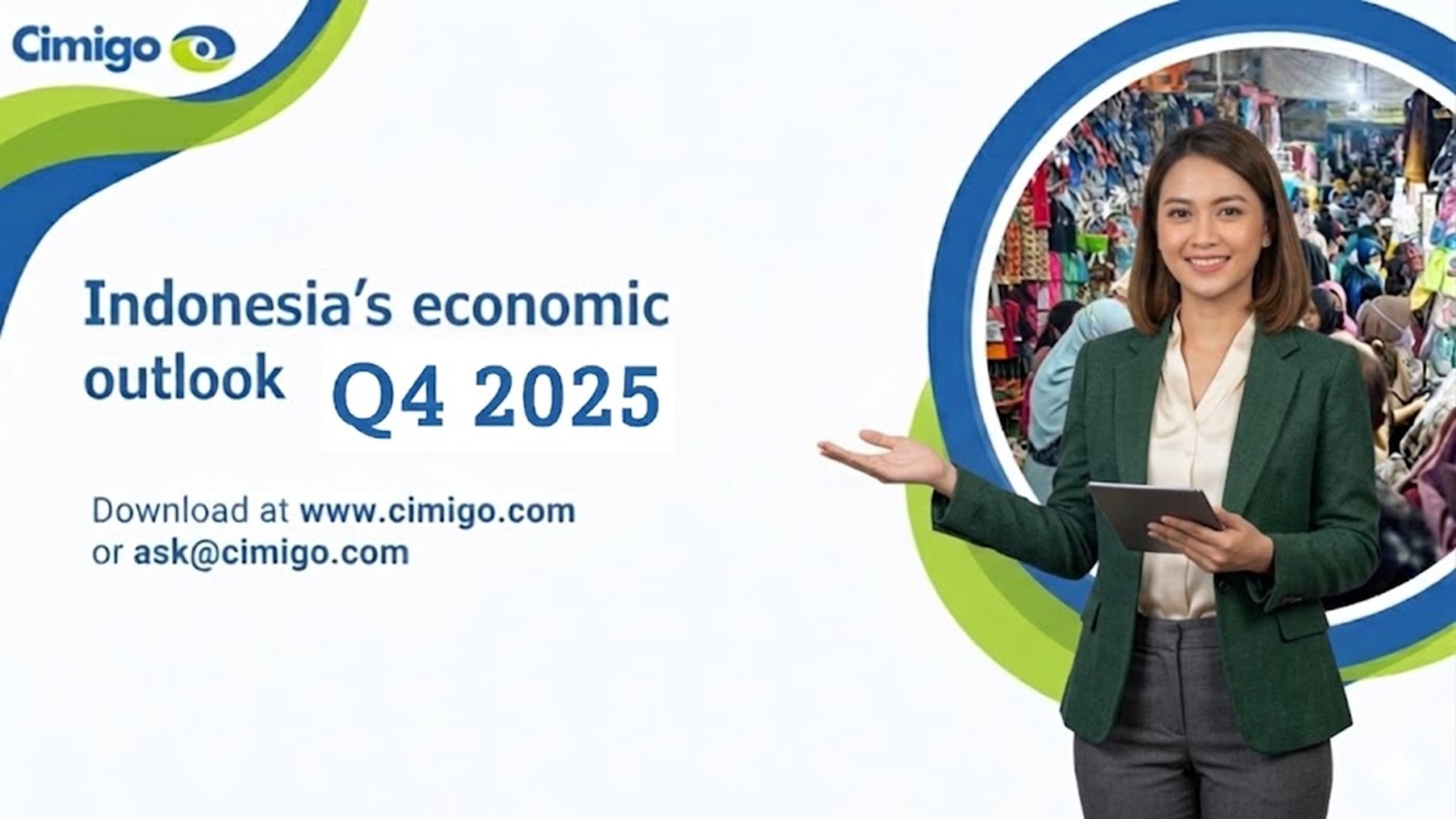
Indonesia’s economic outlook Q4 2025
Apr 04, 2026
Indonesia concluded 2025 with steady economic growth and resilient underlying fundamentals,
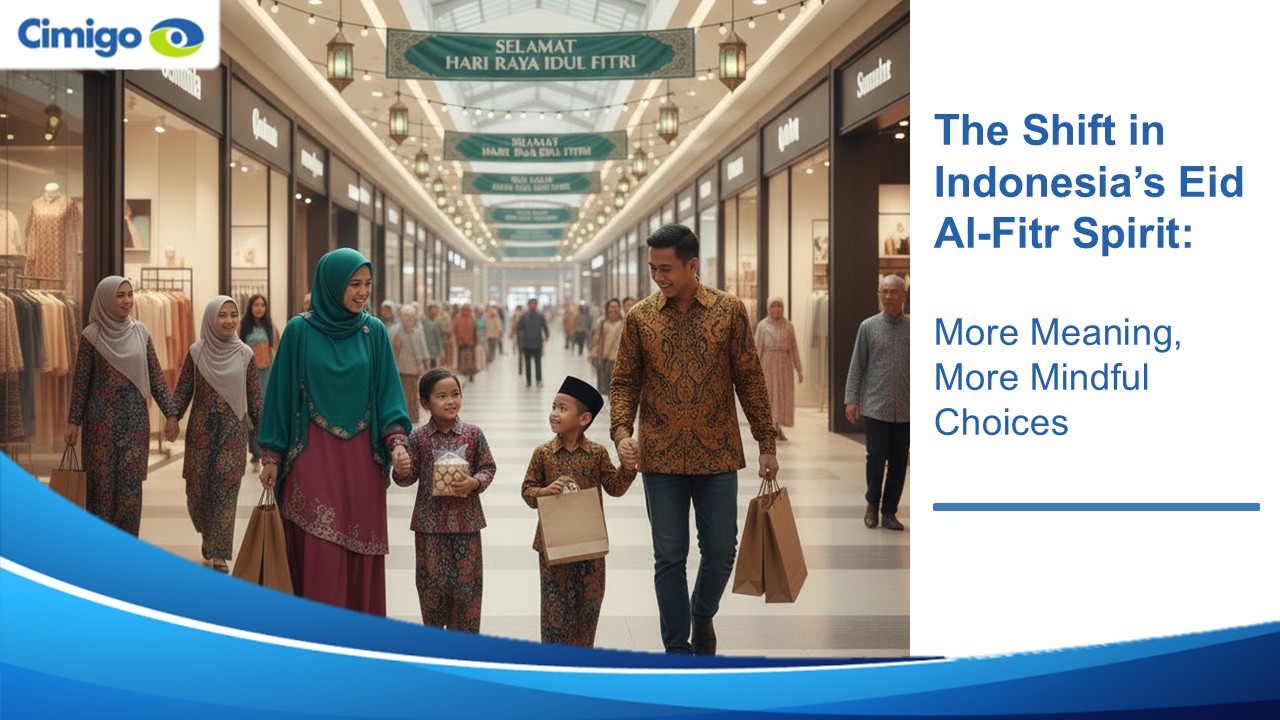
The shift in Indonesia’s Eid Al-Fitr Spirit: More Meaning, More Mindful Choices
Feb 24, 2026
Indonesia’s Eid Al-Fitr consumer landscape Ramadan and Eid al-Fitr are the main drivers of
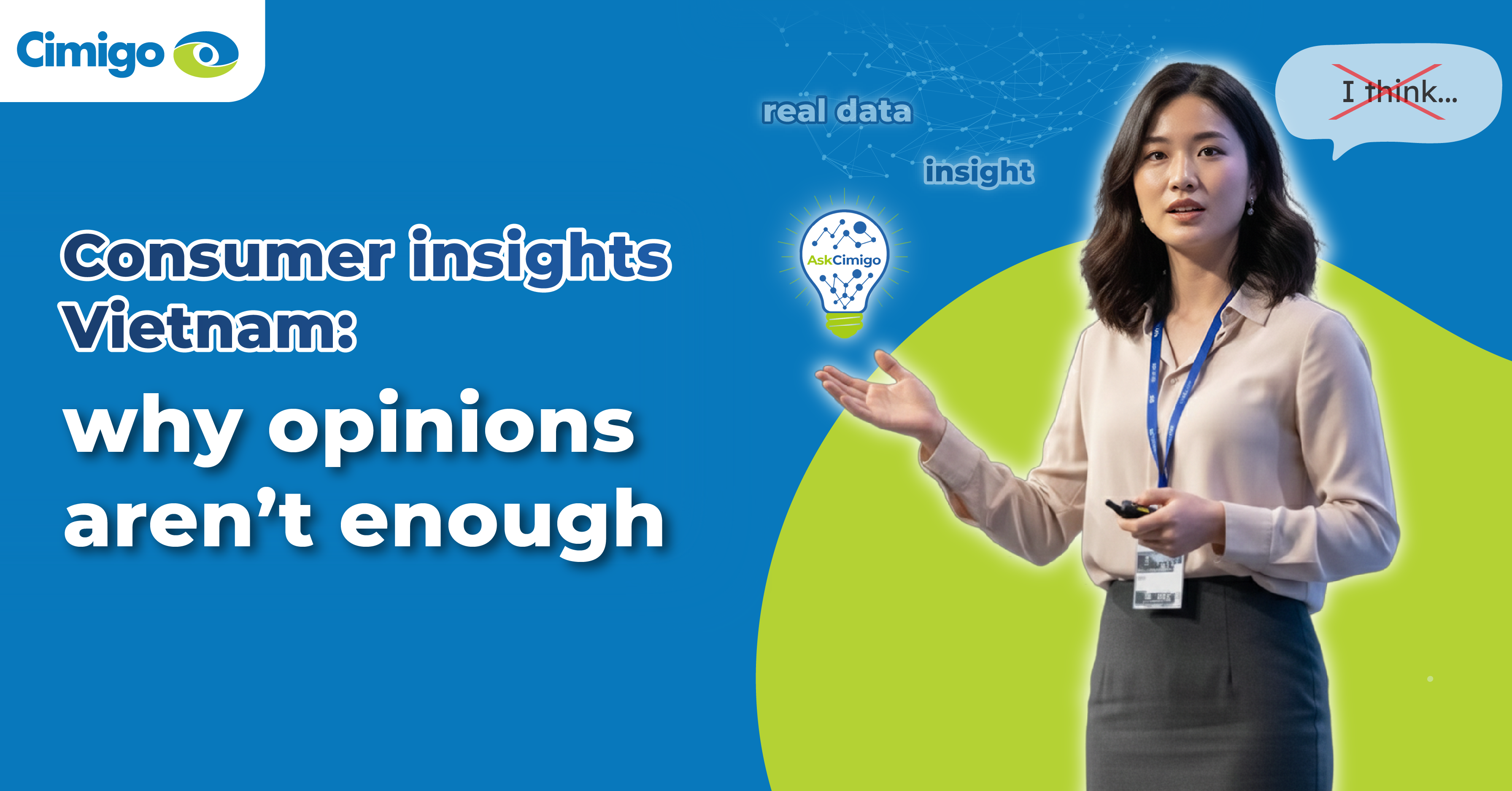
Consumer Insights Vietnam: Why Opinions Aren’t Enough
Feb 23, 2026
Every marketer knows the moment: a tight deadline, a high-stakes decision, and no fresh data on

Đoàn Ngọc Huy (Johnny Doan), CMO & Market Research Expert -
As a Marketing Director and Market Research Expert Advisor across international markets, I have collaborated with numerous market research agencies, both global and local, that operate with a high level of professionalism and effectiveness. Cimigo is among the most outstanding. The Cimigo team demonstrates exceptional professionalism, strong commitment, and operational excellence. From research design and fieldwork execution to insight analysis, all stages are conducted rigorously, delivered on schedule, and closely aligned with business objectives. This is a highly capable team that I would confidently recommend to my partners and stakeholders.
As a Marketing Director and Market Research Expert Advisor across international markets, I have collaborated with numerous market research agencies, both global and local, that operate with a high level of professionalism and effectiveness. Cimigo is among the most outstanding. The Cimigo team demonstrates exceptional professionalism, strong commitment, and operational excellence. From research design and fieldwork execution to insight analysis, all stages are conducted rigorously, delivered on schedule, and closely aligned with business objectives. This is a highly capable team that I would confidently recommend to my partners and stakeholders.

Lisa Nguyen - Vietnam Marketing Lead

Mark Ratcliff - Managing Director
The team at Cimigo are my favourite researchers in South East Asia. They’ve proved adept at tackling the most private and complex personal issues at qualitative research level, not flinching when the client endlessly chopped and changed fieldwork timing, or ramped up the workload without warning. They have recruited the most extraordinarily niche consumers without pause or complaint. Their patience with clients and their flexibility and hard work that went above and beyond what was initially asked of them on two projects relating to sexual behaviour means there is now no other research company we would choose to work with in that part of Asia. The fact they also pulled off a third project for us so well, on men’s relationship with beer and beer advertising, shows they have breadth of expertise— we still quote from the report they produced.
The team at Cimigo are my favourite researchers in South East Asia. They’ve proved adept at tackling the most private and complex personal issues at qualitative research level, not flinching when the client endlessly chopped and changed fieldwork timing, or ramped up the workload without warning. They have recruited the most extraordinarily niche consumers without pause or complaint. Their patience with clients and their flexibility and hard work that went above and beyond what was initially asked of them on two projects relating to sexual behaviour means there is now no other research company we would choose to work with in that part of Asia. The fact they also pulled off a third project for us so well, on men’s relationship with beer and beer advertising, shows they have breadth of expertise— we still quote from the report they produced.

Kevin McQuillan - Chief Marketing Officer

Sam Houston - Chief Executive Officer

Minh Thu - Consumer Market Insights Manager

Travis Mitchell - Executive Director

Malcolm Farmer - Managing Director

Hy Vu - Head of Research Department

Joe Nelson - New Zealand Consulate General

Steve Kretschmer - Executive Director
York Spencer - Global Marketing Director

Laura Baines - Programmes Snr Manager

Mai Trang - Brand Manager of Romano

Hanh Dang - Product Marketing Manager

Luan Nguyen - Market Research Team Leader
Max Lee - Project Manager

Chris Elkin - Founder

Ronald Reagan - Deputy Group Head After Sales & CS Operation
Chad Ovel - Partner

Private English Language Schools - Chief Executive Officer

Rick Reid - Creative Director

Anya Nipper - Project Coordination Director

Dr. Jean-Marcel Guillon - Chief Executive Officer

Joyce - Pricing Manager

Matt Thwaites - Commercial Director

Aashish Kapoor - Head of Marketing

Kelly Vo - Founder & Host

Thanyachat Auttanukune - Board of Management

Hamish Glendinning - Business Lead

Thuy Le - Consumer Insight Manager

Richard Willis - Director

Ha Dinh - Project Lead
Geert Heestermans - Marketing Director

Vo Thi Thuy Ha - Commercial Effectiveness

Louise Knox - Consumer Technical Insights

Aimee Shear - Senior Research Executive

Dennis Kurnia - Head of Consumer Insights
Tania Desela - Senior Product Manager
Thu Phung - CTI Manager
Linda Yeoh - CMI Manager

 Team
Team
Cimigo’s market research team in Vietnam and Indonesia love to help you make better choices.
 Solutions
Cimigo provides market research solutions in Vietnam and Indonesia that will help you make better choices.
 Trends
Cimigo provides a range of consumer marketing trends and market research on market sectors and consumer segments in Vietnam and Indonesia.
 Reports
Cimigo provides a range of free market research reports on market sectors and consumer segments in Vietnam and Indonesia.