Vietnam consumer trends 2026
Feb 05, 2026
Vietnam is still a growth market, but consumer trends 2026 show that it has matured faster than

Vietnam mid-year economic outlook 2026
 Richard Burrage
 Jul 15, 2026
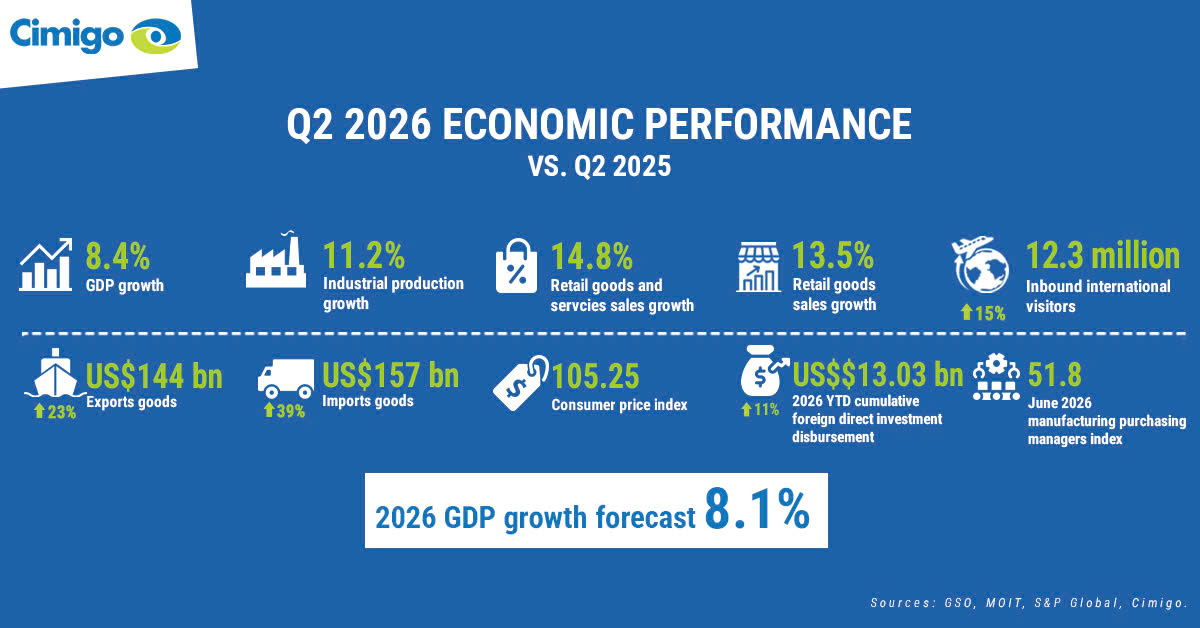
Vietnam mid-year economic outlook 2026. Vietnam recorded GDP growth of 8.18% in the first half of 2026, making it one of Asia’s strongest-performing economies. Manufacturing continues to expand, exports remain resilient, and infrastructure investment is accelerating.
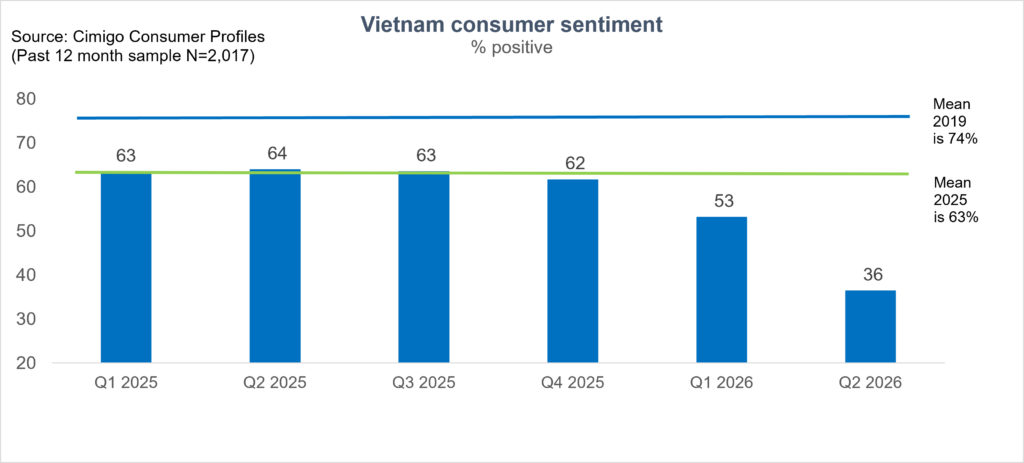
Vietnam’s economy is growing, but many businesses are asking the same question. Cimigo’s latest business sentiment research provides a fresh perspective. Business confidence has fallen to its lowest level since Cimigo began tracking sentiment in early 2022. Consumer purchasing confidence has also declined sharply, alongside expectations that household incomes will improve over the coming year.
These findings suggest that while economic output is increasing, many businesses and consumers have yet to experience the benefits in their day-to-day lives. This apparent contradiction highlights an important point for decision-makers: headline economic indicators only tell part of the story.
Vietnam’s growth remains genuine; however, the economy is moving at two speeds. It is increasingly concentrated within a relatively small number of sectors. Manufacturing continues to benefit from strong export demand. Construction activity is supported by significant public infrastructure investment, while logistics, transport, technology and financial services continue to expand alongside industrial growth. Together, these sectors account for 70% of Vietnam’s recent economic momentum.
The experience is very different for businesses that depend primarily on domestic consumption. Many retailers continue to report cautious spending. Restaurants and discretionary consumer services remain under pressure. Small and medium-sized enterprises face weaker demand, while professional service firms increasingly report clients delaying investment and purchasing decisions.
GDP measures production, not prosperity. This distinction helps explain why economic growth can coexist with weak business sentiment. When growth is concentrated in export-oriented industries and capital investment, the wider economy will take longer to benefit.
The most striking finding is the rapid decline in expectations for business conditions over the next twelve months. Compared with previous survey waves, optimism has fallen dramatically, while expectations that conditions will worsen have increased significantly. This represents the weakest level of business confidence recorded since the survey began in 2022. The reasons are both global and domestic.
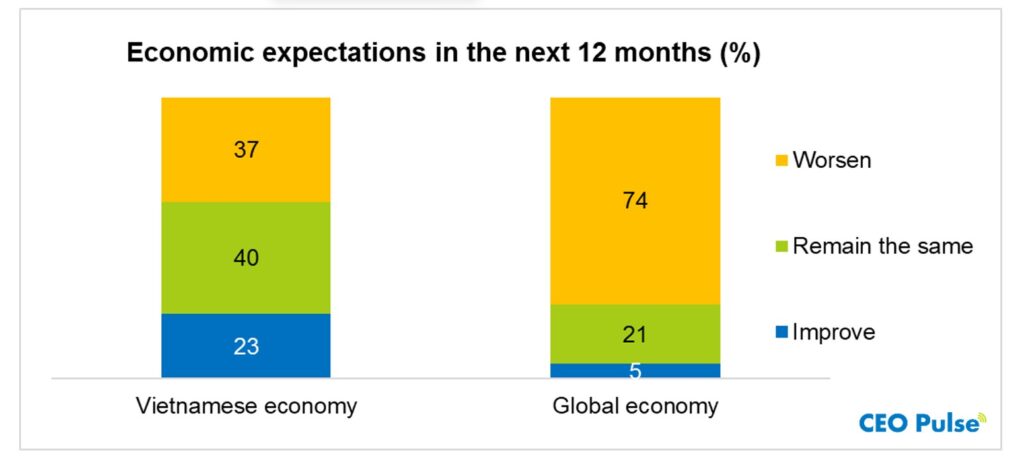
International uncertainty continues to weigh on business planning. Geopolitical conflict has increased volatility in energy prices, directly affecting transport costs and operating expenses. Global trade uncertainty also continues to influence investment decisions.
Domestically, businesses are adapting to substantial structural reforms. Government restructuring, increased digitisation, tax enforcement for household businesses, and wider economic formalisation are creating long-term opportunities. Still, they also introduce short-term uncertainty as organisations adjust to new ways of operating.
Consumer confidence often responds more slowly than economic growth. Although employment remains relatively strong, households continue to face higher living costs. Fuel price volatility has affected transportation expenses, while broader inflationary pressures continue to influence discretionary spending.
Mortgage interest rates in 2025 ranged from 5.5% to 6.5% to stimulate the property market. By mid-year 2026, introductory rates at major banks are generally around 8.5% to 11%. However, after the promotional period expires, most mortgages revert to floating rates of approximately 12% to 14%.
Consumer sentiment shows that both purchase confidence and expectations of future household income have declined considerably. Consumers appear increasingly cautious about major purchases, preferring to delay non-essential spending until economic conditions feel more certain.
This matters because consumer confidence influences far more than retail sales. It affects demand across hospitality, financial services, healthcare, education, property and many other sectors that depend on household spending decisions.
Not every indicator points towards caution. Manufacturing purchasing managers continue to report confidence in future output, supported by expectations of stronger demand, new product development and continued expansion plans. Although confidence remains below levels seen before the Middle East conflict, recent surveys indicate optimism is improving compared with earlier in the year.
Trade data also provides important context. Imports exceeded exports during the second quarter, resulting in a temporary trade deficit. While this might initially appear concerning, increased imports of machinery, industrial equipment and production inputs often accompany periods of investment-led growth.
Electricity demand tells a similar story. Commercial electricity consumption increased by almost 10% during the first half of 2026, reflecting continued industrial expansion alongside seasonal weather effects. Viewed together, these indicators suggest that Vietnam’s productive economy remains strong even as domestic demand softens.
While short-term confidence has weakened, Vietnam’s longer-term outlook remains positive. Several structural developments are expected to strengthen the economy over the coming years, including:
These initiatives are unlikely to transform consumer sentiment overnight. Instead, they represent structural reforms that should improve productivity, investment and competitiveness over the medium to long term.
The key lesson from the Vietnam mid-year economic outlook is not that growth is slowing. Rather, different parts of the economy are moving at different speeds. Businesses serving export markets may continue to experience strong demand. Organisations involved in infrastructure, manufacturing, logistics and technology are likely to benefit from ongoing investment.
Businesses dependent on domestic consumer spending may need to prepare for a more cautious environment, with customers remaining selective about discretionary purchases and businesses taking longer to commit to investment decisions.
This makes evidence-based decision-making more valuable than ever. Headline GDP figures remain important, but they should be interpreted alongside consumer confidence, business sentiment and sector-specific indicators to build a more complete picture of market conditions.
Vietnam mid-year economic outlook 2026 shows that economic growth is moving at two speeds, and understanding how businesses and consumers perceive that growth provides equally valuable insight into future demand.
Organisations that combine macroeconomic indicators with robust market research will be better positioned to identify opportunities, manage risk and respond to changing consumer behaviour as Vietnam’s economy continues to evolve.
Vietnam mid-year economic growth is currently concentrated in sectors such as manufacturing, logistics and infrastructure. Many consumer-facing businesses have yet to experience the same level of demand, while global uncertainty and domestic reforms continue to affect confidence.
A two-speed economy describes a situation where some sectors experience rapid growth while others remain relatively weak. Vietnam’s current economic environment demonstrates this pattern, with export industries outperforming many domestic consumer sectors.
Consumer confidence influences spending behaviour, investment decisions and demand across multiple sectors. It often provides an early indication of future economic activity beyond headline GDP figures.
Businesses should monitor consumer confidence, business sentiment, sector-specific demand, export performance and the impact of ongoing government reforms alongside traditional macroeconomic indicators.

Get instant access to syndicated consumer insights, market trends, and competitive intelligence across Vietnam.
If you have any questions or inquiries, please get in touch with us at ask@cimigo.com, or follow Cimigo’s newsletter for more useful insights.


Vietnam consumer trends 2026
Feb 05, 2026
Vietnam is still a growth market, but consumer trends 2026 show that it has matured faster than

Indonesia consumer trends 2025
May 11, 2025
Indonesia consumer trends 2025 highlights eight key reasons why Indonesia is poised for a rebound.
The Road to Saigon
Apr 15, 2025
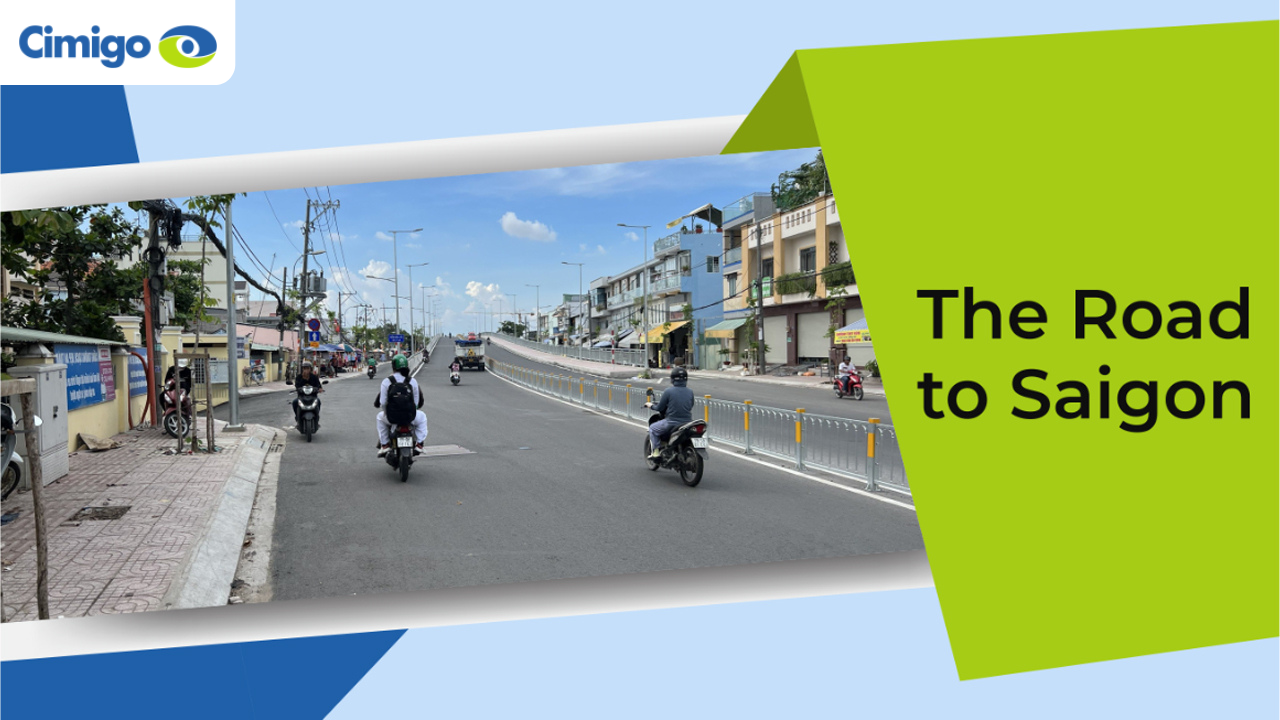
Watch the Road to Saigon and learn about the stories of the residents. Understand their lives,

Đoàn Ngọc Huy (Johnny Doan), CMO & Market Research Expert -
As a Marketing Director and Market Research Expert Advisor across international markets, I have collaborated with numerous market research agencies, both global and local, that operate with a high level of professionalism and effectiveness. Cimigo is among the most outstanding. The Cimigo team demonstrates exceptional professionalism, strong commitment, and operational excellence. From research design and fieldwork execution to insight analysis, all stages are conducted rigorously, delivered on schedule, and closely aligned with business objectives. This is a highly capable team that I would confidently recommend to my partners and stakeholders.
As a Marketing Director and Market Research Expert Advisor across international markets, I have collaborated with numerous market research agencies, both global and local, that operate with a high level of professionalism and effectiveness. Cimigo is among the most outstanding. The Cimigo team demonstrates exceptional professionalism, strong commitment, and operational excellence. From research design and fieldwork execution to insight analysis, all stages are conducted rigorously, delivered on schedule, and closely aligned with business objectives. This is a highly capable team that I would confidently recommend to my partners and stakeholders.

Lisa Nguyen - Vietnam Marketing Lead

Mark Ratcliff - Managing Director
The team at Cimigo are my favourite researchers in South East Asia. They’ve proved adept at tackling the most private and complex personal issues at qualitative research level, not flinching when the client endlessly chopped and changed fieldwork timing, or ramped up the workload without warning. They have recruited the most extraordinarily niche consumers without pause or complaint. Their patience with clients and their flexibility and hard work that went above and beyond what was initially asked of them on two projects relating to sexual behaviour means there is now no other research company we would choose to work with in that part of Asia. The fact they also pulled off a third project for us so well, on men’s relationship with beer and beer advertising, shows they have breadth of expertise— we still quote from the report they produced.
The team at Cimigo are my favourite researchers in South East Asia. They’ve proved adept at tackling the most private and complex personal issues at qualitative research level, not flinching when the client endlessly chopped and changed fieldwork timing, or ramped up the workload without warning. They have recruited the most extraordinarily niche consumers without pause or complaint. Their patience with clients and their flexibility and hard work that went above and beyond what was initially asked of them on two projects relating to sexual behaviour means there is now no other research company we would choose to work with in that part of Asia. The fact they also pulled off a third project for us so well, on men’s relationship with beer and beer advertising, shows they have breadth of expertise— we still quote from the report they produced.

Kevin McQuillan - Chief Marketing Officer

Sam Houston - Chief Executive Officer

Minh Thu - Consumer Market Insights Manager
Travis Mitchell - Executive Director

Malcolm Farmer - Managing Director

Hy Vu - Head of Research Department

Joe Nelson - New Zealand Consulate General
Steve Kretschmer - Executive Director
York Spencer - Global Marketing Director

Laura Baines - Programmes Snr Manager

Mai Trang - Brand Manager of Romano

Hanh Dang - Product Marketing Manager

Luan Nguyen - Market Research Team Leader
Max Lee - Project Manager

Chris Elkin - Founder

Ronald Reagan - Deputy Group Head After Sales & CS Operation
Chad Ovel - Partner

Private English Language Schools - Chief Executive Officer
Rick Reid - Creative Director

Anya Nipper - Project Coordination Director

Dr. Jean-Marcel Guillon - Chief Executive Officer

Joyce - Pricing Manager

Matt Thwaites - Commercial Director

Aashish Kapoor - Head of Marketing

Kelly Vo - Founder & Host
Thanyachat Auttanukune - Board of Management
Hamish Glendinning - Business Lead

Thuy Le - Consumer Insight Manager

Richard Willis - Director

Ha Dinh - Project Lead
Geert Heestermans - Marketing Director

Vo Thi Thuy Ha - Commercial Effectiveness

Louise Knox - Consumer Technical Insights

Aimee Shear - Senior Research Executive

Dennis Kurnia - Head of Consumer Insights
Tania Desela - Senior Product Manager
Thu Phung - CTI Manager
Linda Yeoh - CMI Manager

 Team
Team
Cimigo’s market research team in Vietnam and Indonesia love to help you make better choices.
 Solutions
Cimigo provides market research solutions in Vietnam and Indonesia that will help you make better choices.
 Trends
Cimigo provides a range of consumer marketing trends and market research on market sectors and consumer segments in Vietnam and Indonesia.
 Reports
Cimigo provides a range of free market research reports on market sectors and consumer segments in Vietnam and Indonesia.